You step into the bathroom, glance into the bowl, and suddenly you’re wondering why your pee looks so dark today. Or so orange. Most of us never really look at our urine, yet it’s a pretty honest snapshot of what’s going on inside. So a quick look is worth the few seconds.
First the good news: most color changes are harmless. They usually come down to how much you drank, what you ate, or a medication or vitamin you’re taking. Some colors deserve more attention, especially if they stick around or show up alongside other symptoms. This article helps you sort out what the colors mean and where the line to a doctor’s visit sits.
Why is urine yellow in the first place?
Most of the yellow comes from urobilin, a breakdown product of hemoglobin, the pigment in red blood cells. When old red blood cells are processed in the liver, the leftovers leave your body through bile and the kidneys. Urobilin is a normal part of your metabolism, not something foreign.
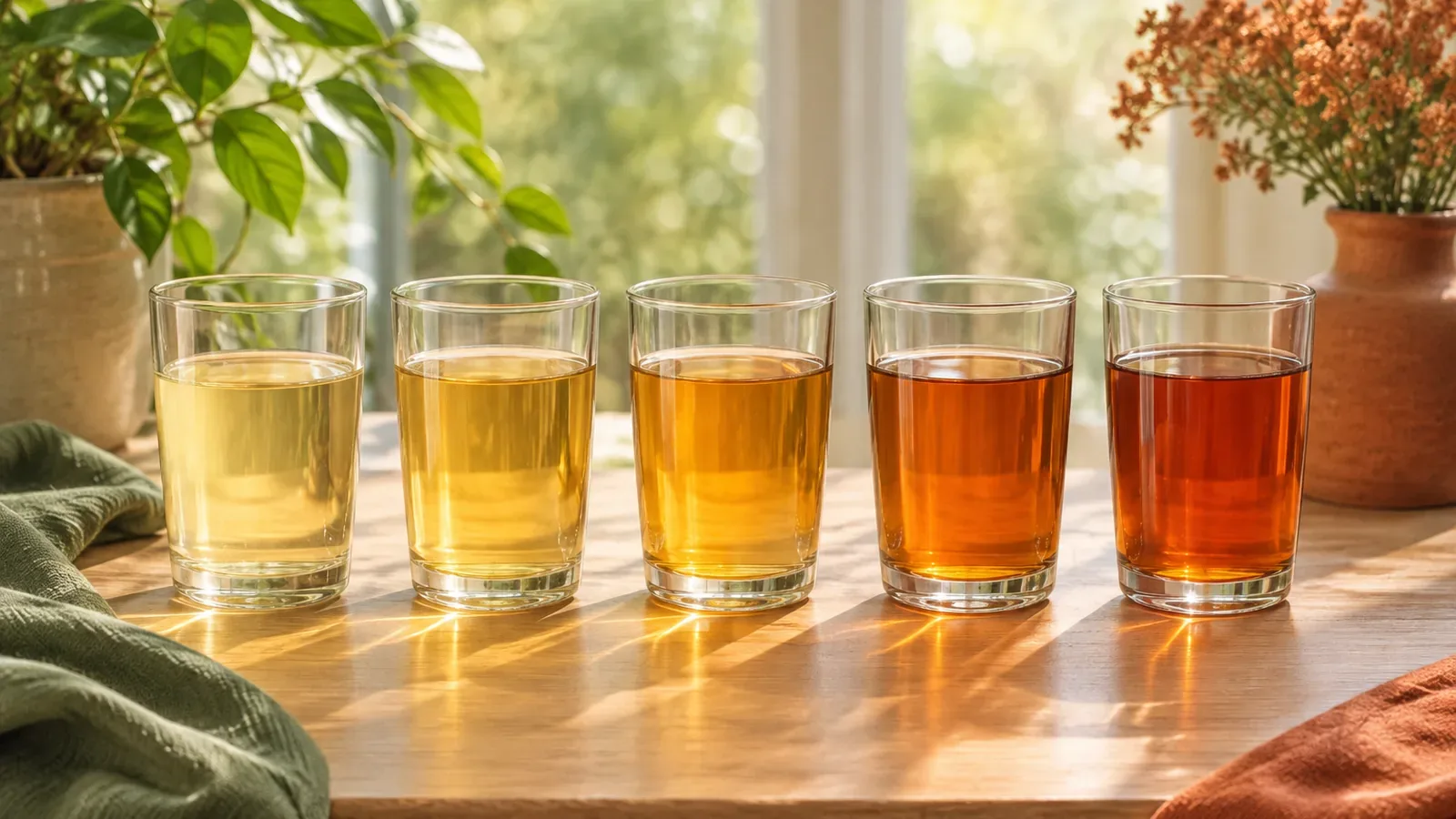
How intense the color looks depends mostly on how diluted your urine is. Plenty of fluid makes it pale, not much fluid makes it dark. That’s why color is a rough but useful clue about your hydration. A rule of thumb you’ll find in many health guides: pale yellow to amber is unremarkable, while very dark or almost clear urine means you’re either drinking a lot or not quite enough.
Dark urine: Not enough water, or something else?
Dark urine is the most common change, and usually it’s simply low fluid intake. That happens faster than you’d think: after a workout, on a hot day, during a bout of diarrhea, or when you forget to drink anything until lunchtime. Morning urine is often a bit more concentrated because you haven’t had anything to drink overnight. That’s normal.
Some foods and substances also color urine without anything being wrong:
- Beets and rhubarb can turn urine reddish or pink.
- Fava beans, blackberries or large amounts of rhubarb can release pigments that show up in your urine.
- Certain B vitamins from supplements can make urine bright yellow, sometimes almost neon. It’s harmless and simply shows that your body is clearing out extra amounts.
- Some medications change the color by releasing dyes. If you’re unsure, ask your pharmacist.
A simple test helps: if the color returns to normal after one or two days of drinking more and skipping the suspect foods, it was almost certainly harmless.
When dark urine can be more serious
Dark, tea-colored or cola-brown urine can also point to problems with the liver or bile ducts, or to muscle damage that releases pigments into the blood. These causes are much less common. What matters is whether the color comes with yellowing of the skin or eyes, belly pain, fever or unusual exhaustion. If it does, see a doctor promptly.
Pink or reddish urine: food or blood?
Pink to reddish urine scares a lot of people, but it’s often about what was on the plate. Beets are the classic example. In some people they tint the urine clearly, while in others they don’t do anything at all. The effect is called beeturia, and it’s harmless.
Blood in the urine, called hematuria in medical terms, can look similar, anywhere from light pink to rusty brown. You can’t reliably tell it apart from food coloring just by looking. So if you notice reddish urine and aren’t sure where it came from, get it checked. A simple urine test, often done in a doctor’s office, picks up even tiny amounts of blood. This matters because the causes range from urinary tract infections and kidney stones to conditions of the urinary tract itself, and some of these are best caught early.
A fair caveat: how often blood in the urine shows up in adults, and which causes are most common, depends a lot on age and sex. Guidelines on evaluating it all agree on one thing, though. You need a medical check, because you can’t reliably spot blood by its appearance alone.
Orange, green or blue: unusual colors
Orange urine is usually a matter of diet or medication, such as certain antibiotics or laxatives that contain dyes. High doses of some vitamins can also turn urine a strong yellow-orange. If your urine is dark orange and your stool is pale, or your skin looks yellowish, ask a doctor, because the bile ducts could be involved.
Green or blue-green urine is rare. Medications and food dyes are often the explanation here too. Blue can come from dyes in medicines or certain food colorings. There are also rare metabolic conditions that change urine color. So an unusual color that doesn’t match what you ate or took, and doesn’t fade on its own, is always worth a call.
What you can do in everyday life
- Spread your drinking across the day, for example a glass with each meal and one in between. If your urine is reliably pale yellow, your intake is probably about right.
- Pay extra attention to fluids after exercise and in hot weather, since you lose more through sweat.
- Look at the color on purpose, for instance on your first trip to the bathroom. That way you learn what’s normal for you, which helps when something changes later.
- Note suspicious foods if you’ve eaten beets, rhubarb or blackberries. Next time you’ll know what caused it.
- Skip the water-chugging contests. Drinking far more than you need doesn’t make your urine healthier.
When to see a doctor
A color change that disappears within one or two days of drinking enough and skipping the suspect foods usually doesn’t need further follow-up. Get medical advice if your urine stays dark, pink, red, brown or otherwise unusual for longer, if you can see blood even in just a few drops, or if you also notice pain when urinating, fever, pain in your side or back, yellowing of the skin or eyes, pale stools or severe fatigue. Also reach out if you’re producing noticeably less urine than usual. For severe pain, dizziness or fainting, or confusion, call 911 right away.
Your urine tells you a lot, but it can’t replace an examination. When in doubt, a short appointment is the simplest way to get clarity.
Key takeaways
- Healthy urine ranges from pale yellow to amber. The color mostly comes from urobilin, a breakdown product of old red blood cells, and it depends heavily on how much fluid you drink.
- Dark urine usually means you need more fluid, but food, medication and vitamins can change the color too.
- Pink or reddish urine should be checked by a doctor even though it often has harmless causes such as beets or rhubarb.
- Looking at the color is not a diagnosis: blood in urine can only be confirmed with a test.
- Lasting changes, pain when urinating or fever are reasons to see a doctor soon.
Frequently asked questions
Is it a problem if my urine is sometimes orange?
Usually not. Orange urine often comes from medications, vitamins or how much fluid you’re drinking. If the color fades after one or two days of drinking more, it was probably harmless. If it persists or shows up with pale stools or yellow skin, ask a doctor.
Do beets really turn your urine red?
Yes, in some people. The pigment betanin is partly excreted unchanged, and not everyone is affected to the same degree. The color is harmless and goes away once you stop eating beets.
How can I tell if there’s blood in my urine?
Often you can’t tell by sight alone, because food dyes can look very similar to blood. A urine test at the doctor’s office detects even small amounts of blood reliably. If you see reddish urine that food doesn’t explain, get it checked.
How much should I drink each day to keep my urine pale?
There’s no fixed amount, since needs vary with body size, climate, activity and diet. Pale yellow urine is a good sign that you’re drinking enough. If you have heart, kidney or other health conditions, the right amount may be different, so talk with your doctor.