A crisp apple from the farmers’ market, a bunch of radishes from the garden, a handful of strawberries from the grocery store: fruits and vegetables are among the healthiest foods you can eat. At some point, most of us wonder whether we really need to wash them first, and how.
The short answer: yes, wash everything before you eat it. That includes fruit with a thick peel that you don’t eat, such as bananas or melons. When you cut into it, the knife can drag dirt and germs from the outside into the flesh. The good news is that you don’t need expensive special products or much time. A few simple steps go a long way.
Below, you’ll learn what clings to fruits and vegetables, how germs and pesticides fit in, how to clean different kinds of produce, and which home remedies you can skip.
What Clings to Fruits and Vegetables?
On the surface of produce you’ll usually find three things: soil and sand, microorganisms such as bacteria and mold, and pesticide residues if the crop was treated during growing. Dust, germs picked up during transport, and, with produce from a farmers’ market, sometimes bird droppings or insect debris can also be present.
Strawberries, raspberries, leafy greens, and herbs have many crevices and hairs where dirt can settle. Root vegetables like carrots or potatoes often still have soil in their small hollows.
Why Washing Matters Even for Fruit with Peels
Many people think: if I don’t eat it, it doesn’t matter. That’s only partly true. When you cut a melon with a knife, you can push germs from the rind straight into the fresh fruit. That’s why food safety experts recommend washing fruit with thick skins before cutting it. This includes citrus fruits, too, since you often touch the peel when you squeeze them by hand.
How Do You Wash Fruits and Vegetables Properly?
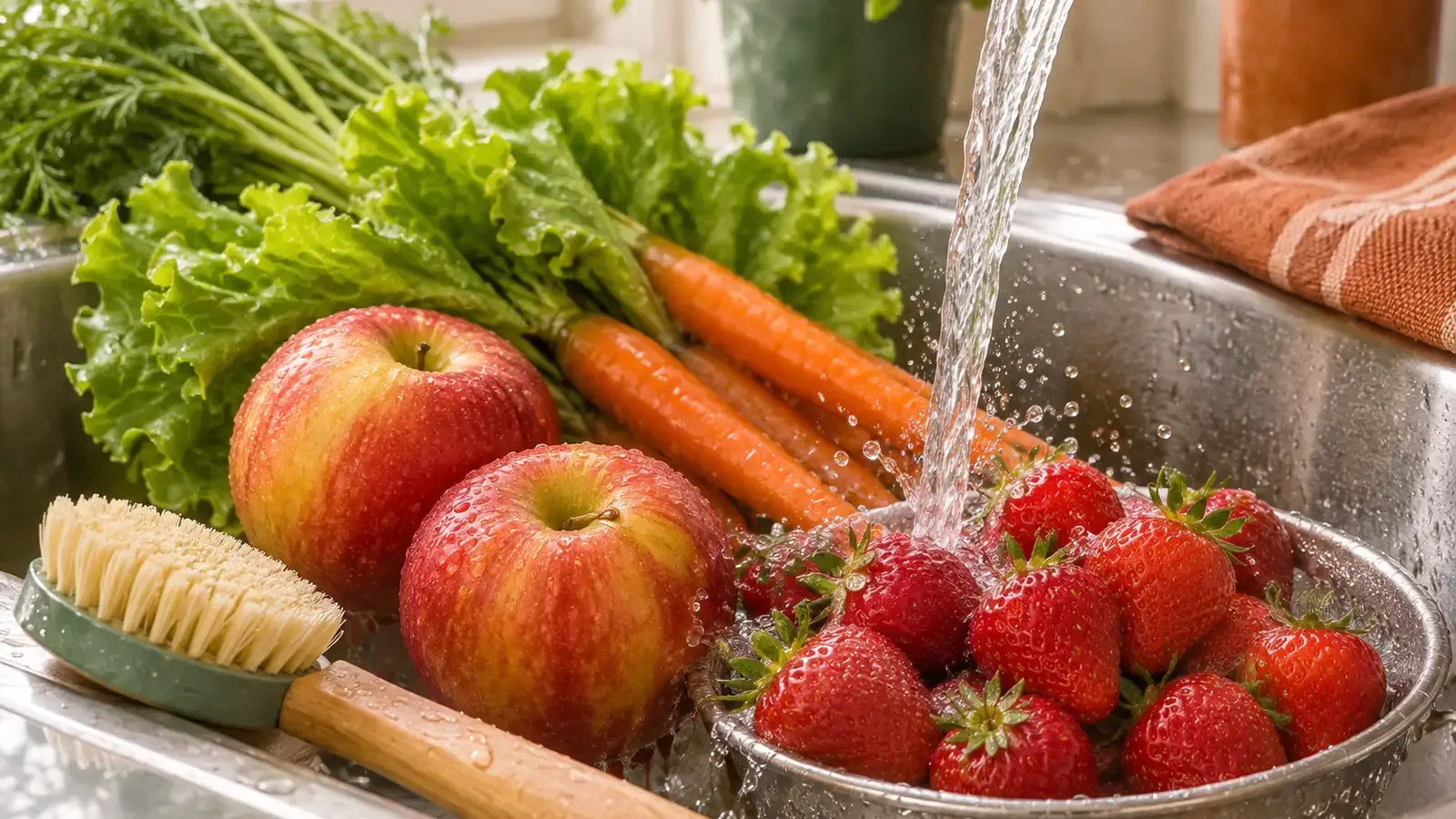
The basic rule is simple: rinse under cold, running tap water. If you soak produce in a bowl of water, dirt can stay in the water and settle back onto the food. Running water carries it away.
Firm Fruits and Vegetables
- Apples, pears, carrots, potatoes, cucumbers: rub under running water with your hands or scrub with a soft vegetable brush.
- Citrus fruits and melons: scrub these too, especially the spot you’ll cut through later.
- Potatoes and root vegetables: brush out soil from crevices thoroughly before peeling.
Soft Fruit and Berries
- Strawberries, raspberries, blueberries: wait to wash them until just before eating, not when you bring them home or store them. Wet berries spoil faster.
- Gently rinse them in a colander under running water. Don’t let them soak, or they’ll turn mushy and lose flavor.
- Remove stems and caps only after washing, so water doesn’t get inside.
Leafy Greens and Herbs
- Rinse leaves one by one, or swish them in a large bowl of fresh water several times.
- Let them drain well or dry them in a salad spinner. Damp leaves spoil faster.
- With heads of lettuce and leeks, pull the leaves apart, since dirt often collects between the layers.
Do Vinegar, Baking Soda, or Dish Soap Help?
You’ll find plenty of home remedies online: vinegar water, baking soda, citric acid, or dish soap. Consumer advocates and food safety agencies have not found a proven benefit over plain water. Please don’t use dish soap: its residue can stay on the surface, and it isn’t meant for food.
Commercial produce washes are also unnecessary for everyday cooking. Clean running water and a little brushing are enough for most kitchens.
Pesticides: What Does Washing Accomplish?
Whether pesticide residues end up on your produce depends on how it was grown and where it came from. In the United States, the Environmental Protection Agency (EPA), the Food and Drug Administration (FDA), and the U.S. Department of Agriculture (USDA) monitor residues, and most samples fall within the legal tolerance limits set by the EPA. Even so, washing is still a good habit.
Rinsing with water removes some residue, mainly what sits loosely on the surface. Substances that have soaked into the produce are hard to get rid of this way. Peeling removes more surface residue, but it also removes valuable nutrients found just under the skin, such as fiber and plant compounds. If you can eat the peel, it’s usually better to wash it well than to throw it away.
Important: for most people, the benefits of eating plenty of fruits and vegetables far outweigh the possible risks from residues. You don’t have to give up produce just because you’re thinking about pesticides.
Germs: What Else Should You Watch For?
Washing reduces germs on the surface but doesn’t eliminate them completely. Simple kitchen hygiene habits matter more than any wash:
- Wash your hands with soap before preparing food.
- Use separate cutting boards for raw meat and for produce, or clean them thoroughly between tasks.
- Store fruits and vegetables separately from raw meat and fish in the refrigerator.
- Cut melons and other fruits with thick rinds only after washing them.
Raw sprouts, bean sprouts, and salads eaten uncooked deserve extra care. Washing alone can’t eliminate every risk. The U.S. Food and Drug Administration (FDA) notes that germs in sprouts are hard to remove by rinsing. If you are pregnant, or have a weakened immune system, be especially cautious with raw sprouts.
Everyday Tips for Washing Without the Hassle
- Wash fruits and vegetables right before you eat or cook them, not weeks ahead.
- Keep a small brush just for produce, and clean it regularly.
- Use one bowl for salad greens so you only have to handle water once: add the leaves, swish, lift them out, change the water.
- Scrub vegetables before cooking, not only after cutting them.
- Pre-cut or bagged vegetables can still be given a quick rinse if that makes you feel more comfortable.
- Dry fruits and vegetables with a clean kitchen towel or paper towel. This helps remove remaining surface moisture and keeps them fresh longer.
When Should You Talk to a Doctor?
If you notice ongoing stomach or intestinal symptoms such as diarrhea, vomiting, or fever after eating raw fruits, vegetables, or sprouts, talk to your doctor or healthcare provider. If your symptoms are severe, or if you belong to a higher-risk group, don’t wait long to seek care.
Key takeaways
- Wash all fruits and vegetables under cold running water before eating, even those with a peel you don’t eat, because germs and dirt can be carried into the flesh when you cut them.
- Scrub firm produce such as apples, carrots, or potatoes with a soft brush; wash leafy greens leaf by leaf or in several changes of water.
- Dish soap, vinegar, or baking soda solutions have not been shown to work better than clean water, so you don’t need special produce washes.
- Washing reduces pesticide residues and germs but does not remove them completely; peeling removes more surface residue but also removes nutrients found just beneath the skin.
- Bagged salad and pre-cut vegetables are often already washed according to manufacturers, but you can give them a quick rinse before eating if you like.
Frequently asked questions
Do I need to wash organic produce too?
Yes, organic fruits and vegetables should be washed as well. Dirt, germs, and dust can cling to the surface regardless of how the produce was grown. Organic farming generally allows fewer synthetic pesticides, but it doesn’t mean the produce is completely free of residues.
Can I clean vegetables with soap or dish soap?
It’s better not to. Dish soap isn’t meant for food, and residue can stay on the surface. Cold running water and a produce brush are enough for everyday cleaning.
How long should I soak lettuce?
Long soaking isn’t necessary. Swish the leaves briefly in fresh water to loosen dirt, then rinse them. Afterward, dry them well so they don’t spoil quickly.
Is water enough to remove pesticide residues?
Water removes some residue, mainly what sits loosely on the surface, but not all of it. Washing is still worthwhile because it also reduces dirt and germs. If you want to be extra cautious, you can peel produce, but keep in mind that some nutrients are lost with the peel.