Many people know that vegetables and whole grains are “good for digestion”, but they can rarely say why. The reason lies in dietary fiber: substances from plant foods that the human body cannot fully digest. They pass largely unchanged into the large intestine, where they have an important job to do.
In a busy everyday life, it is hard to get the right amount. A white bread roll at breakfast, a quick snack in between and a serving of pasta with a light sauce are convenient, but they contain little fiber. That is no reason to worry. With a few simple changes, you can make your diet higher in fiber step by step, without having to give up flavour.
In this guide, you will learn what role fiber plays for your health, which foods contain particularly large amounts, and how you can bring more of it onto your plate with little effort.
What exactly is dietary fiber?
The term is somewhat misleading, because fiber is by no means useless. It belongs to the carbohydrates, but the body’s own digestive enzymes do not break it down. Roughly, there are two groups:
- Insoluble fiber, such as cellulose from skins and leaves, which increases stool volume and stimulates bowel movement.
- Soluble fiber, for example pectins in apples or beta-glucans in oats, which swell in the gut and form a gel-like consistency.
Most plant foods contain both types in different proportions. That is why it makes sense not to rely on a single “miracle ingredient”, but to enjoy variety on your plate.
Why is fiber important for your health?
Fiber is named in many recommendations as an important part of a balanced diet. Research points mainly to the following connections:
- Digestion: Fiber supports regular bowel activity and can help with constipation.
- Satiety: Fiber-rich foods keep you full for longer, because they require more chewing and are digested more slowly. This can make it easier to keep your appetite under control.
- Blood sugar and blood fats: Soluble fiber can slow down the absorption of sugar and fat from the gut. In an overall balanced diet, this contributes to more stable blood sugar levels.
- Gut bacteria: Some fiber serves as food for the bacteria in your intestine. Research on this connection is still ongoing, but the direction is well supported.
It is important to be honest about this: fiber is one building block of a healthy diet, not a cure-all. Many of these connections come from observational studies, and not every question has been fully settled. Statements such as “fiber prevents disease” go too far.
Which foods contain fiber?
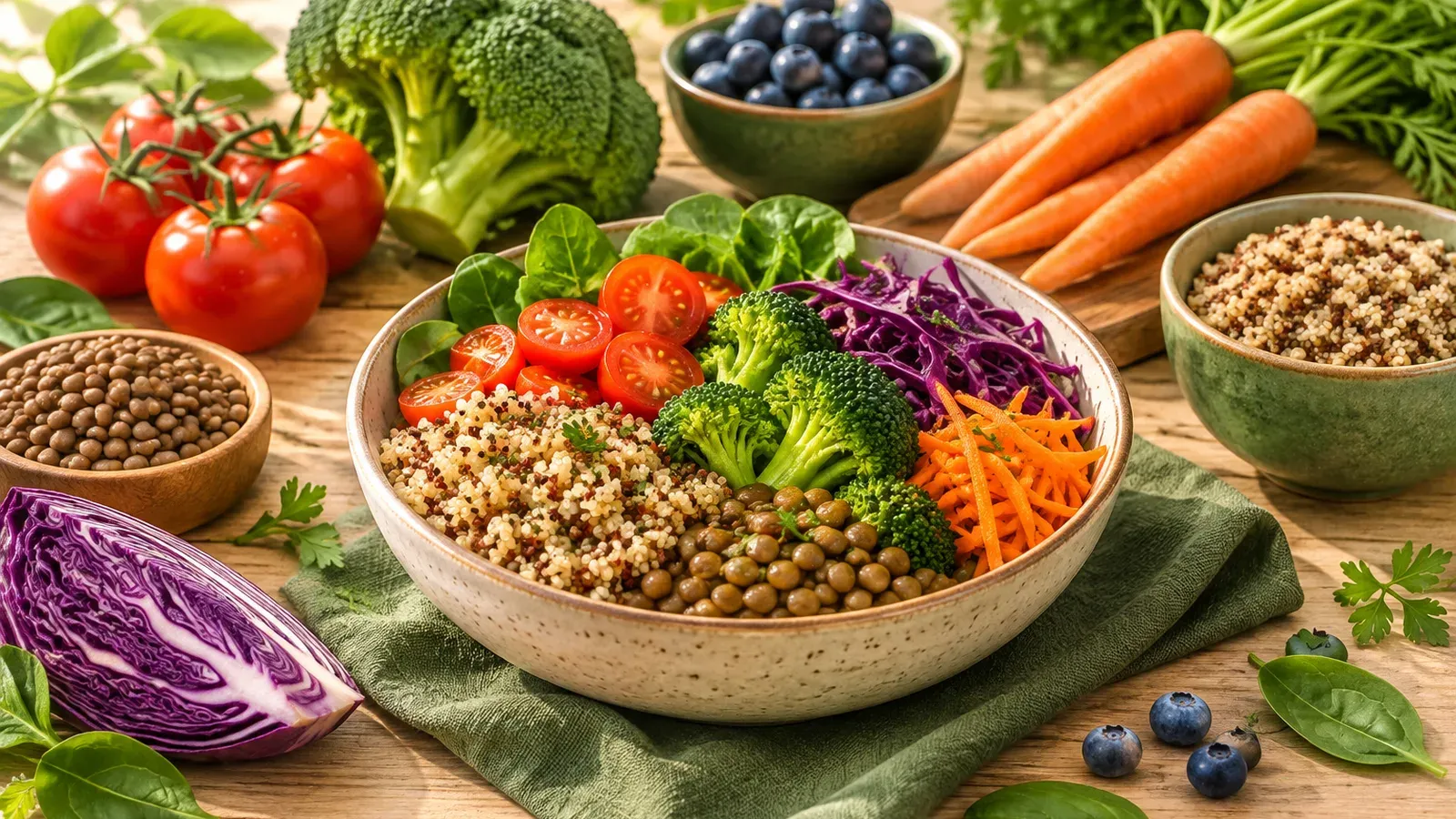
Fiber is found exclusively in plant foods. Especially rich sources include:
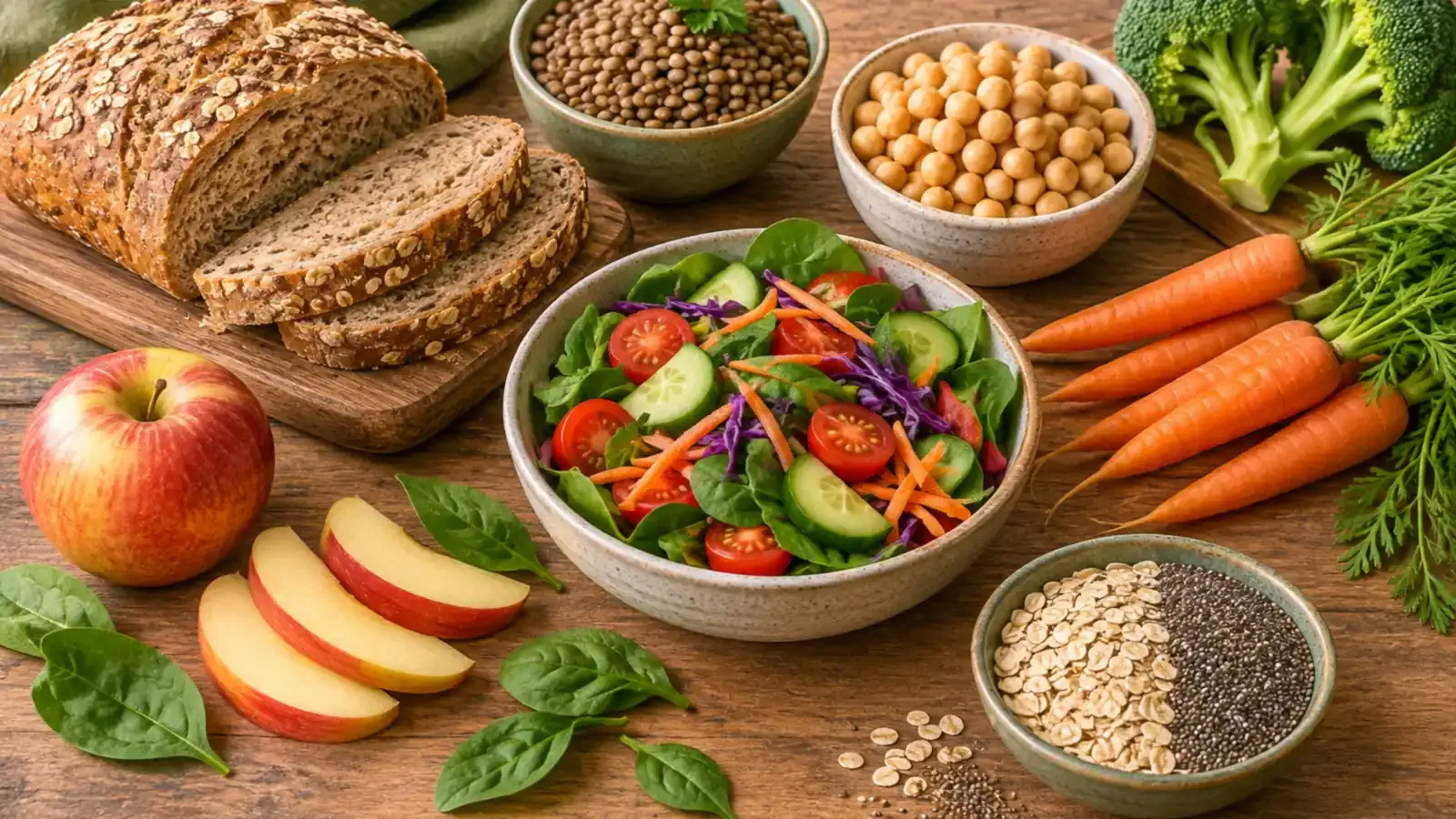
- Whole grain products: wholemeal bread, rolled oats, wholemeal pasta, brown rice and wholemeal flour. Note: a light roll labelled “multigrain” is not automatically whole grain, so check the ingredient list.
- Legumes: lentils, chickpeas, white and red beans, and peas are among the most fiber-rich foods there are.
- Vegetables: broccoli, carrots, Brussels sprouts, parsnips and spinach provide plenty of fiber, along with vitamins and minerals.
- Fruit: apples, pears, berries and kiwis, ideally eaten with the skin.
- Nuts and seeds: flaxseeds, chia seeds, almonds or sunflower seeds can easily be sprinkled over yoghurt, salads or bread.
- Potatoes: cooked with their skins, they contain more fiber than peeled ones.
Animal foods such as meat, milk, cheese or eggs contain no fiber. Refined sugar and white flour also provide hardly any.
How much fiber should you eat each day?
The German Nutrition Society (DGE, Deutsche Gesellschaft für Ernährung) recommends that adults consume about 30 grams of fiber per day. Many people in Germany do not reach this amount, according to nutrition surveys. A helpful rule of thumb: if you eat a portion of vegetables or legumes with each main meal, choose whole grains, and reach for fruit or nuts between meals, you will come quite close to the goal.
Starting gradually matters: if you increase your fiber intake sharply and suddenly, you may notice bloating or a feeling of fullness. Your gut needs a few weeks to adapt to more fiber. Drinking more water helps the fiber swell and keeps stools soft.
How can I add fiber to my everyday routine?
Small, repeatable steps usually work better than big resolutions. These ideas can be put into practice without much effort:
Breakfast
- Rolled oats instead of cornflakes, for example as porridge with milk or yoghurt.
- Wholemeal bread instead of white bread, topped with vegetable slices such as cucumber or tomato.
- Fruit in pieces, berries, or a tablespoon of flaxseed stirred into yoghurt.
Lunch and dinner
- Fill half of your plate with vegetables, raw or cooked.
- Replace white pasta with wholemeal pasta gradually, starting with a mix of both kinds.
- Put lentils, kidney beans or chickpeas on the menu once or twice a week, for example in stews, curries or salads.
- Cook potatoes with their skins on.
In between meals
- An apple or a handful of nuts instead of pastries or crisps.
- Carrot sticks or cucumber slices with herb quark.
Increasing gradually
- Introduce one change per week, such as the wholemeal bread.
- Keep an eye on your fluid intake: water or unsweetened teas support digestion.
- Pay attention to how your body responds and adjust the pace.
Are there limits or special considerations?
For healthy adults, a fiber-rich diet is generally well tolerated. However, with certain bowel conditions, such as irritable bowel syndrome or inflammatory bowel diseases, the diet may need to be adjusted. The same applies to people who have had abdominal surgery or who have swallowing difficulties. In such cases, changes should be discussed with your doctor or a dietitian. General advice is not suitable here.
Fiber from foods is usually unproblematic. You can do without fiber supplements with isolated fibers if your diet is already varied.
When should you seek medical advice?
If you experience digestive symptoms such as persistent abdominal pain, blood in your stool, unintended weight loss or a lasting change in your bowel habits, have these checked by a doctor before changing your diet. Advice from a health professional is also helpful if you have known conditions of the stomach or intestines.
Key takeaways
- Dietary fiber consists of plant components that the human body cannot fully digest, and it plays an important role in digestion, satiety and gut health.
- The German Nutrition Society (DGE, Deutsche Gesellschaft für Ernährung) recommends that adults eat about 30 grams of fiber per day.
- Good sources are whole grain products, legumes, vegetables, fruit, nuts and seeds, which are easy to fit into everyday meals.
- Increase your intake gradually and drink enough fluids so that your gut can adapt.
- If digestive problems persist or you are unsure, it is worth seeking medical advice.
Frequently asked questions
How much fiber do I need per day?
The German Nutrition Society (DGE) recommends about 30 grams of fiber per day for adults. Many people do not reach this amount in everyday life. Increasing your intake over several weeks is usually the most comfortable approach.
Which foods contain the most fiber?
Legumes such as lentils, beans and chickpeas are among the most fiber-rich foods. Whole grain products, rolled oats, vegetables, fruit with the skin, and nuts and seeds also provide plenty of fiber.
Why do I get bloating when I eat more fiber?
Your gut needs time to adapt to more fiber, and gut bacteria partly break it down with gas formation. Increasing the amount slowly and drinking enough usually helps. If the symptoms persist, have them checked by a doctor.
Are fiber supplements just as good as fiber from food?
Your body benefits mainly from fiber in natural foods, which also provide vitamins, minerals and other plant compounds. For healthy people with a balanced diet, supplements are generally not necessary.