Many people know the situation: bowel movements are difficult, you strain, and still do not feel fully finished. It is natural to wonder whether the way you sit on the toilet plays a role. That question is fair, because your body posture really does change the position of your bowel. However, it is only one factor among several.
In this guide you will learn how posture and emptying are connected, what the research says, and which simple changes in everyday life often help. It is not a miracle cure, but it is a small, free adjustment that is easy to try.
How does body posture affect bowel movements?
The rectum, the last section of the large intestine, opens to the outside through the anus. Between the two lies an angle known as the anorectal angle. It is shaped partly by a muscle called the puborectalis, which wraps around the rectum like a sling and helps keep you continent while sitting and standing. When this muscle relaxes during a bowel movement, the angle opens and the way becomes clearer.
On a standard toilet seated upright, this angle is often not optimally open. You sit upright, your thighs lie horizontally on the seat, and your abdomen tends to stay somewhat folded. When squatting, with your knees bent and your upper body leaning slightly forward, the rectum aligns more straight. Many people therefore experience less pressure when they strain.
This connection has been discussed in specialist circles for some time and is anatomically plausible. At the same time, it must be said honestly: the research on toilet stools and bowel movements is still limited, and there are hardly any large, high-quality studies on the topic. The experiences are therefore easy to understand, but they are not equally strong for everyone.
Why straining is not good for your body
Straining is a natural reflex, but constant hard pushing has side effects. Pressure in the abdomen rises, and the veins in the pelvis and around the anus can also be stressed. Over time, this can contribute to haemorrhoids or discomfort around the anus. If you struggle for a long time during bowel movements, it is worth looking not only at your posture but also at the causes of the constipation.
A healthy bowel movement should happen without great effort. If you regularly have to push hard or do not feel fully emptied afterwards, it is worth taking a closer look at your habits.
Which posture can help?
The following points have proven useful in everyday life and are easy to put into practice:
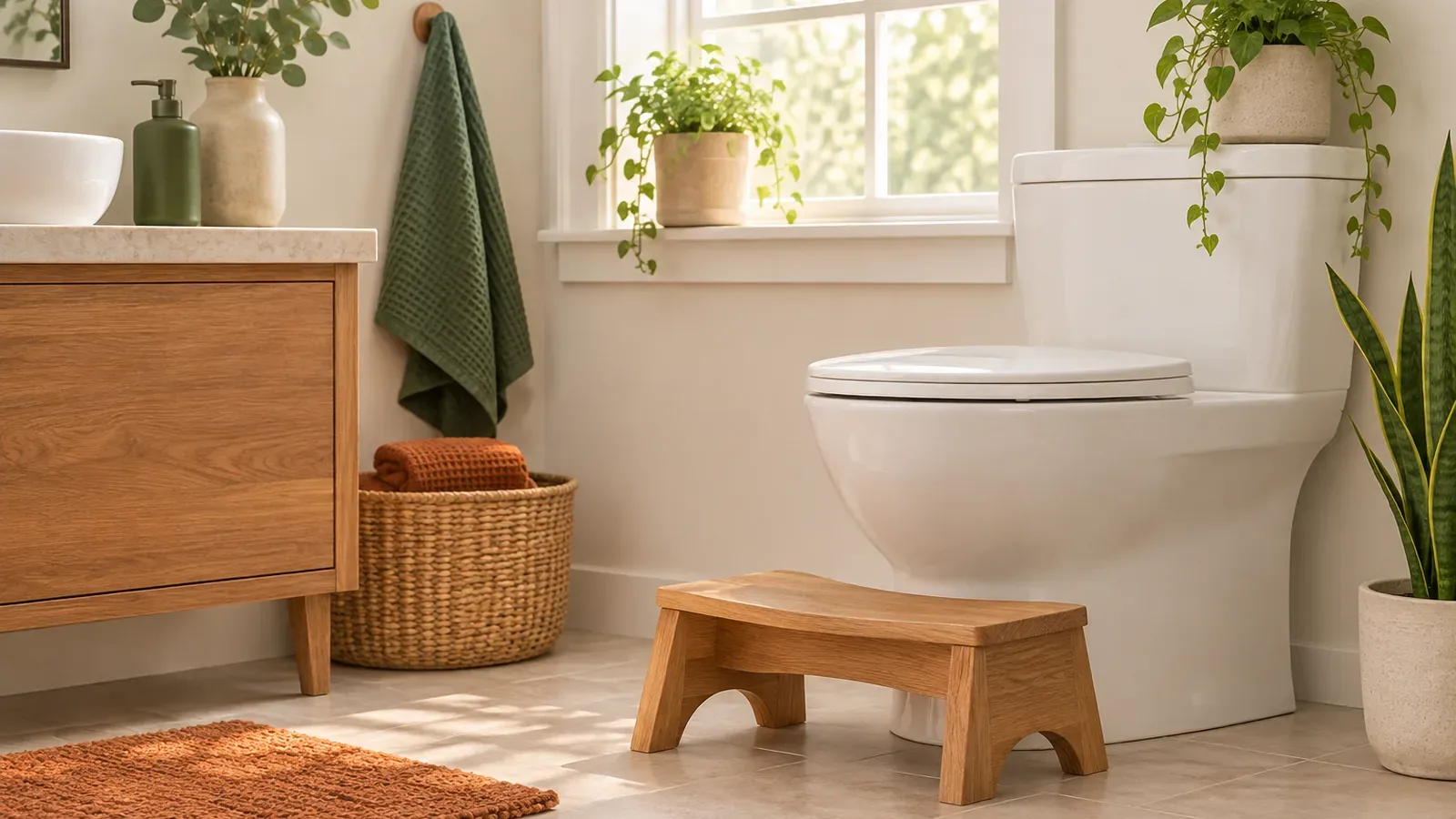
- Raise your feet: A small stool or step under your feet brings your knees higher than your hips. This imitates the squatting position.
- Lean your upper body slightly forward: Rest your forearms on your thighs. This often makes it easier for your abdominal muscles to relax.
- Place your feet shoulder-width apart: A stable stance supports relaxation, because your body does not have to tense up.
- Avoid straining hard: Breathe out calmly through your mouth and let your belly soften. Forceful pushing while holding your breath should be avoided.
- Do not sit for too long: If nothing happens after a few minutes, stand up and try again later.
Are there toilet stools or alternatives?
There are special toilet stools that are placed in front of the toilet. A simple, sturdy step stool from your household can serve the same purpose, as long as it stands securely. It is important that you can support yourself well, for example on the wall or a grab rail. Older people or those with limited mobility should take care not to lose their balance.
What else helps against constipation?
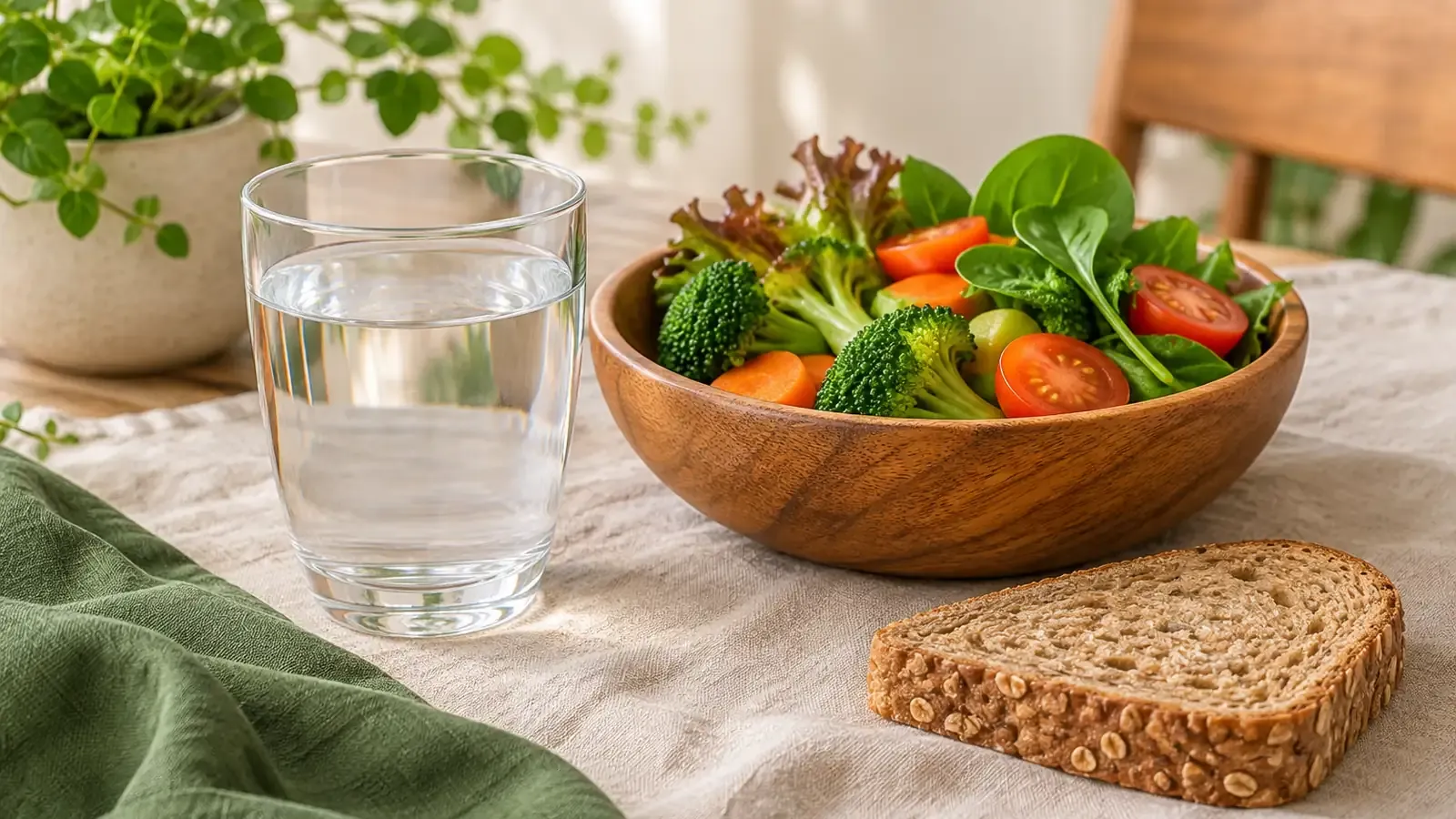
Posture is only part of the picture. For regular digestion, everyday habits play a major role. The German Nutrition Society (Deutsche Gesellschaft für Ernährung, DGE) recommends, among other things, eating enough dietary fibre every day from vegetables, legumes, wholegrain products and fruit. Fibre binds water and makes the stool bulkier, which can stimulate bowel activity.
Adequate fluid intake is just as important. The DGE gives about 1.5 litres of water or unsweetened drinks per day as a guideline, and more in hot weather or during physical exertion. If you increase your fibre, you should also adjust how much you drink, otherwise bloating or hard stools may occur.
Movement helps too. Even regular walks support bowel activity. And the bathroom routine matters: if you regularly suppress the urge, for example because of lack of time or because public toilets are unpleasant, you are not training your bowel towards regularity.
Practical tips for everyday life
- Plan a few undisturbed minutes for the toilet after breakfast or another meal. Your bowel often becomes especially active after eating.
- Try a raised footrest for several days and observe how your straining changes.
- Spread your fluid intake across the day instead of drinking large amounts at once.
- Increase your fibre slowly so that your bowel can adapt.
- Move every day, even if it is just a brisk walk of about twenty minutes.
- Do not take magazines or your phone to the toilet, as they unnecessarily prolong sitting. Long sitting times encourage straining.
When should you have it checked by a doctor?
Occasional constipation is usually harmless and can often be managed well with the measures above. The picture is different if symptoms last longer than a few weeks, if you notice blood in your stool, if you lose weight unintentionally, if your bowel habits change noticeably and suddenly, or if you have severe pain. Such signs should be checked by a doctor so that other causes can be ruled out. Advice from a doctor is also worthwhile if you have pre-existing conditions or take medications that may affect digestion.
Key takeaways
- Your posture during a bowel movement affects how straight the passage from the rectum to the anus runs; in a slightly leaning, squatting position, the sphincter usually relaxes more easily.
- Raising your feet, for example with a footstool, can change the angle between the rectum and the anus and so reduce straining.
- Research on toilet stools is still limited; the effects are noticeable for many people, but not equally for everyone.
- More important than posture are usually a fibre-rich diet, enough fluid, regular exercise and a regular bathroom routine without time pressure.
- If you notice blood in your stool, lasting discomfort, weight loss or a sudden change in your bowel habits, please seek medical advice.
Frequently asked questions
Does a toilet stool really help?
Many people find the squatting position more comfortable and strain less. However, the scientific evidence is still limited, and the effect is not the same for everyone. It can be a useful addition, but it does not replace the basics of healthy digestion.
How high should the footrest be?
The goal is for your knees to be slightly higher than your hips and your upper body to lean gently forward. A stool about 15 to 20 centimetres high is a good starting point for many people. It is important that the position is stable and comfortable.
How long should you sit on the toilet?
You should avoid time pressure, but sitting for long periods and straining puts stress on the pelvic floor and the veins around the anus. If nothing happens after a few minutes, it is better to stand up and try again later.
When is constipation a reason to see a doctor?
Medical advice is worthwhile if symptoms last longer than a few weeks, if blood appears in your stool, if you lose weight unintentionally, or if you have severe pain. Sudden, marked changes in your bowel habits should also be checked.