You have probably heard that your gut likes to be “well fed.” But what does that mean in real life? Do you need to count grams, buy expensive products or follow complicated rules? The good news is that the basic idea is simple. Plant foods bring fiber and many other plant compounds with them, and those are exactly what the bacteria in your large intestine live on.
Your colon is home to trillions of microorganisms, collectively known as the gut microbiome or, in everyday language, gut flora. They help break down food and produce metabolites that may be important for the health of the intestinal lining. How this community is composed depends heavily on what you eat.
In this article, we look at what fiber actually is, why variety on your plate matters so much, and how you can eat a colorful diet without feeling restricted.
What Is Fiber, and Why Do Gut Bacteria Need It?
Fiber is the part of plant foods that your small intestine cannot fully digest. It includes cellulose from the cell walls of vegetables, pectins from apples and citrus fruits, inulin from chicory, and lignins found in whole grains. Broadly, fiber is divided into soluble and insoluble types, and almost all plant foods contain a mix of both.
What your body does not digest reaches the large intestine. There, many fibers are fermented by bacteria, producing short-chain fatty acids such as butyrate, propionate and acetate. Butyrate is an important energy source for the cells lining your colon. Researchers are still studying what other effects these compounds have in the body. Some connections are well established, while others are still being investigated.
In short, fiber is largely food for many of your gut bacteria. Nutrition scientists call such compounds prebiotics: food components that can encourage the growth of beneficial bacteria.
Why Does Variety Matter More Than Quantity Alone?
Fiber is not one single substance. Different bacteria are able to use different types of fiber. Some specialize in inulin, others in resistant starch from legumes, and others in pectins. If you eat the same few foods every day, you only feed a portion of the bacterial community well.
Diversity of the gut microbiome is often discussed as an important marker of gut health in review articles. A broad, varied bacterial community is associated with more stable gut function. However, how strongly this relationship plays out for an individual is not yet fully clear. The research is still evolving, so it is wise not to expect miracles.
It is also worth knowing that the composition of your gut flora does not change overnight. It responds to changes in eating habits over weeks and months. That is encouraging: small, lasting changes count for more than a short burst of effort.
Which Foods Bring More Variety to Your Plate?
The German Nutrition Society (DGE) recommends that adults aim for about 30 grams of fiber per day. Many people in Germany, and in the United States as well, fall short of this. A helpful way to get there is to think in food groups:
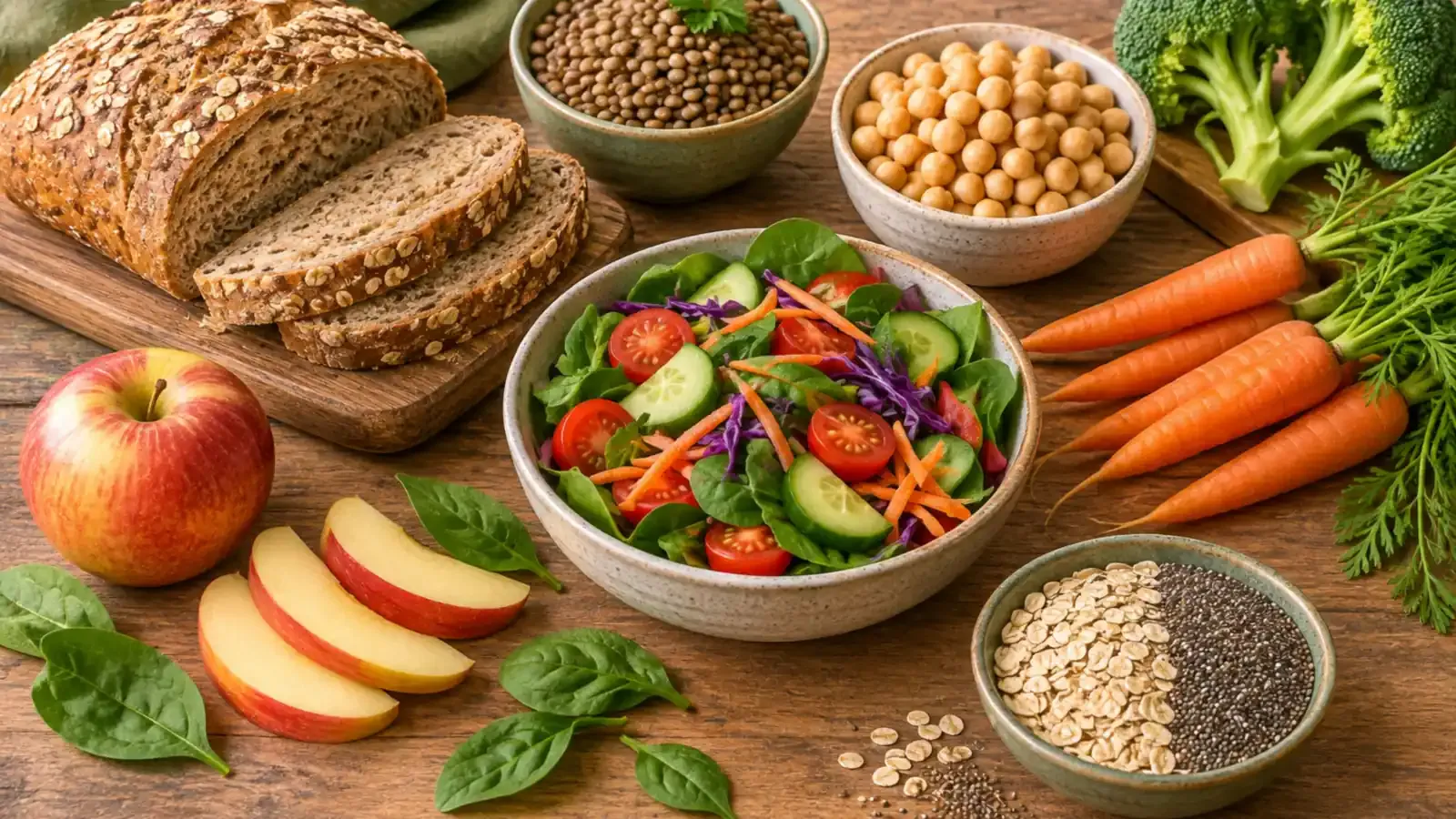
- Vegetables: carrots, broccoli, bell peppers, beets, cabbage, onions, spinach and many more. The more colors, the more varied the plant compounds.
- Fruit: apples, berries, pears, kiwi, bananas. The skin often contains a good amount of fiber, as long as the fruit is well washed.
- Legumes: lentils, chickpeas, black beans, kidney beans, pinto beans. They are rich in fiber and plant protein.
- Whole grains: rolled oats, whole-wheat bread, whole-grain pasta, farro, rye, quinoa or brown rice.
- Nuts and seeds: flaxseed, chia seeds, walnuts, almonds. A small amount goes a long way.
- Potatoes with skin on and unpeeled vegetables such as zucchini.
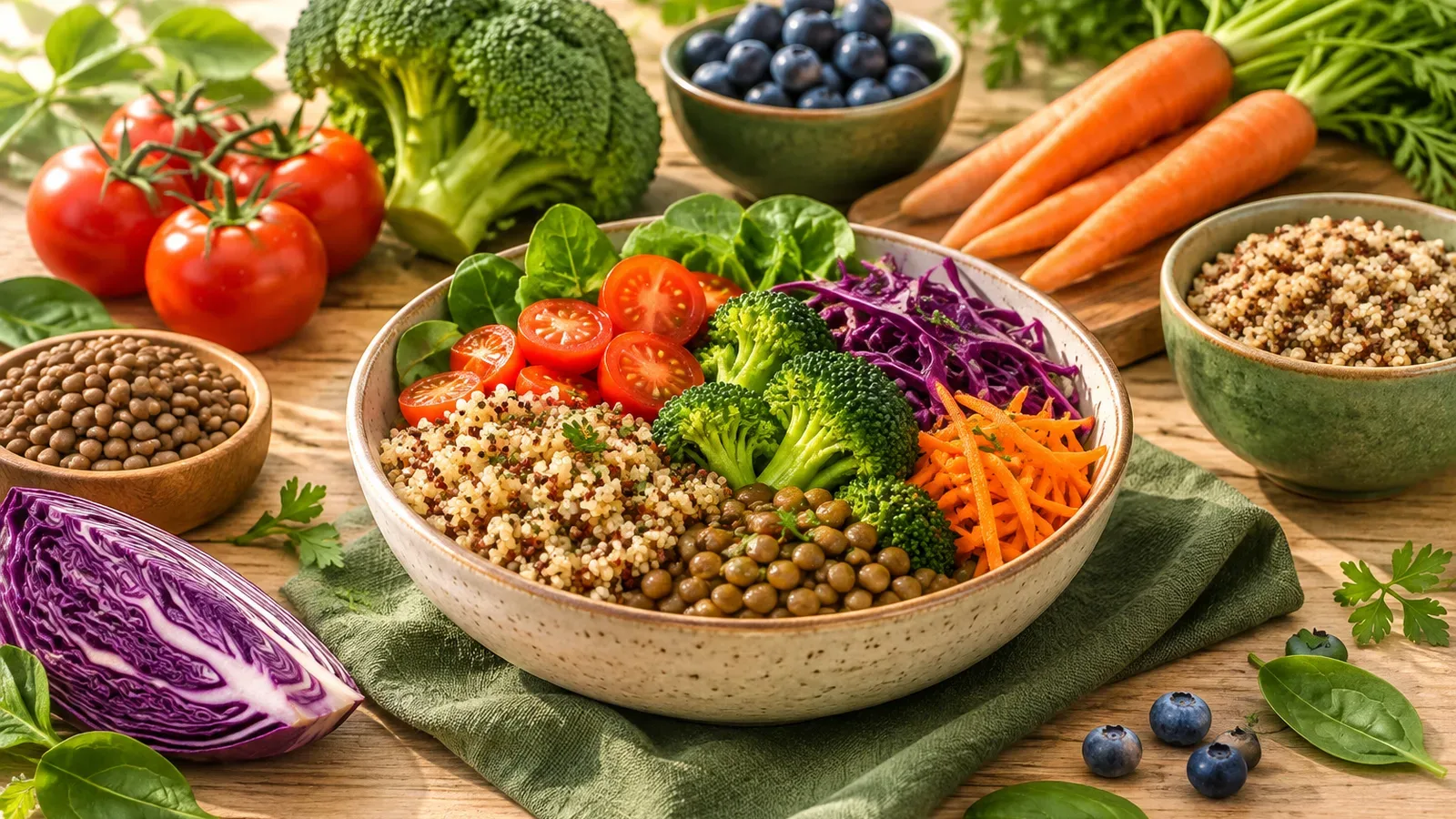
It helps to use colors as a checklist: red (tomatoes, red peppers, radishes), orange and yellow (carrots, pumpkin, mango), green (broccoli, spinach, kiwi), blue and purple (blueberries, red cabbage, eggplant), and white and brown (onions, garlic, mushrooms, legumes, whole grains). Each color stands for different plant compounds, and your gut bacteria benefit from a wide selection.
How Can You Put a Colorful Diet Into Practice?
Many people don’t struggle with knowing what is healthy. They struggle with busy days. Here are a few ideas that take little extra effort:
- Upgrade breakfast: oatmeal or whole-grain toast topped with berries, apple slices and a spoonful of flaxseed or nuts.
- Add legumes at lunch: lentils or chickpeas in soups, salads or as a spread. A can of chickpeas or lentils saves cooking time.
- The three-color rule: aim for at least three colors of vegetables or fruit on every plate, for example bell pepper, cucumber and tomato.
- Vegetables as a snack: carrot, cucumber or pepper sticks with a dip made from Greek yogurt or hummus.
- Rotate your weekly menu: instead of cooking the same five dishes every week, deliberately switch up grains, vegetables and legumes.
- Frozen and canned produce: frozen vegetables are often similarly nutritious to fresh ones and are easy to keep on hand.
- Leave the skins on: scrub potatoes, apples and cucumbers well and eat them with the peel.
Increase Slowly So Your Gut Can Keep Up
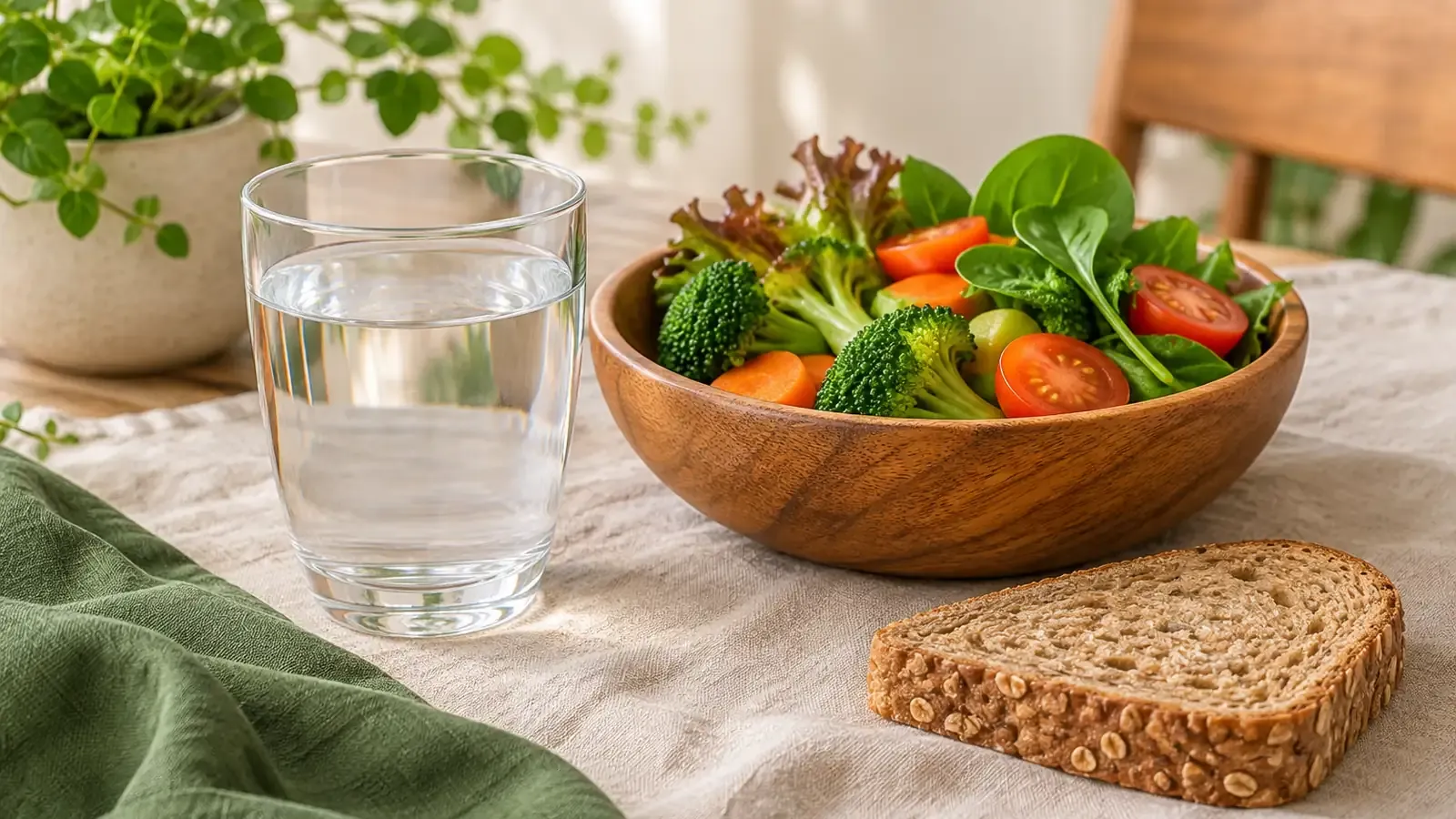
If you have been eating little fiber so far, increase the amount gradually and drink enough water. A sudden large jump can cause gas and bloating. Your gut needs a few weeks to adjust. This is normal and usually temporary.
Which Myths About Fiber Are Not True?
A common misconception is that “more fiber is always better.” In reality, it is sensible to spread your fiber intake across the day and fit it into an overall balanced diet. If you already enjoy whole grains and vegetables, you do not need fiber powders or supplements. The building blocks are available in ordinary foods.
Another myth is that “probiotic yogurts or capsules are the key.” Fermented foods such as sauerkraut or yogurt can be part of a varied diet, but their effect on the gut flora varies greatly by product and is not yet fully settled scientifically. The foundation remains a plant-rich diet.
Finally, there is the stubborn idea that gas is always a sign that vegetables are “bad” for you. Often it is simply a side effect of changing your eating habits, and over time your gut adapts to the variety.
When Should You See a Doctor?
A fiber-rich, colorful diet is well tolerated by most healthy people. However, if you have persistent digestive problems, such as severe pain, blood in your stool, unintended weight loss or a clear change in your bowel habits, have them checked by a doctor. If you have an existing bowel condition, make dietary changes only in consultation with your doctor or a registered dietitian.
Key takeaways
- Dietary fiber is found in plant foods and cannot be fully digested by your body; the bacteria in your large intestine use it as food.
- The German Nutrition Society (DGE) recommends about 30 grams of fiber per day for adults, a target many people fall short of.
- Variety matters as much as quantity, because different plant foods feed different kinds of gut bacteria.
- Colorful plates with vegetables, fruit, legumes, whole grains, nuts and seeds bring this variety into everyday meals without strict rules.
- The exact links between diet, gut microbiome and health are not yet fully understood, but fiber is a well-supported part of a healthy diet.
Frequently asked questions
How much fiber should I eat per day?
The German Nutrition Society (DGE) recommends about 30 grams of fiber daily for adults. Many people fall short of this. Increase your intake gradually so your gut has time to adjust.
Why does variety in vegetables and fruit matter?
Different gut bacteria use different types of fiber. A wide range of plant foods feeds more kinds of bacteria. Research is still ongoing, but the basic idea is considered well founded.
Can fiber supplements replace eating more vegetables?
Fiber from whole foods also provides vitamins, minerals and other plant compounds that a powder does not. A supplement cannot replace this variety. Vegetables, fruit, legumes and whole grains are the best place to start.
Do legumes always cause gas?
Legumes can cause gas because some of their sugars are fermented only in the large intestine. Gradually building them into your diet usually helps. Thorough rinsing of canned beans and soaking dried beans can also improve tolerance.