Many people know the worry: your waistband feels tighter than it used to, and your belly is getting rounder. That belly fat affects more than appearance and can be linked to health risks is less widely known. Readers often ask in particular whether a larger waist circumference increases the risk of cancer.
The good news first: a larger waist circumference does not mean that you will develop cancer. It is one factor among many, and it can usually be influenced. Knowing how to assess your own waist circumference gives you a simple reference point for your health.
This article explains what research so far shows about the link between belly fat and cancer, how you can measure your waist circumference yourself, and which steps in everyday life can actually help. It is about observations and recommendations, not promises.
What is belly fat, and why is it different from fat on the hips and thighs?
Body fat is not distributed evenly. Some of it lies directly under the skin, for example on the thighs, buttocks or abdominal wall. This so-called subcutaneous fat is less problematic for health. The other part is visceral fat, which sits deep in the abdominal cavity between the internal organs.
Visceral fat is more metabolically active. It releases messenger substances that can affect the body, such as substances that promote inflammatory processes, and it can impair how the body handles blood sugar and blood fats. For this reason, a higher amount of belly fat is regarded in medicine as a risk factor in its own right, even if the scales show only a modest change.
An important point: people of normal weight can also have a high level of belly fat. Conversely, not everyone with excess weight is affected to the same degree. Waist circumference is therefore a useful complement to the body mass index (BMI).
How are belly fat and cancer risk connected?
Large observational studies, including analyses with many thousands of participants and systematic reviews, have shown for years a link between an increased waist circumference and a higher risk of certain cancers. Research mentions, among others, colorectal cancer, breast cancer after menopause, endometrial cancer, and cancers of the oesophagus or pancreas. The strength of the link differs between men and women and depends on the type of cancer.
Researchers explain this connection with several mechanisms that can influence each other:
- Chronic inflammation: Fat tissue in the abdomen can release inflammatory messenger substances that may promote changes in cells.
- Insulin and growth factors: An elevated insulin level can stimulate cell growth. Part of the research examines the link with insulin resistance.
- Hormones: Fat tissue produces oestrogens, and the hormone balance changes. This plays a particular role in hormone-dependent cancers.
It is important to put this into context: most of the findings come from observational studies. They show that people with more belly fat more often develop certain cancers, but they do not prove in every individual case that the fat is the cause. Diet, physical activity, smoking, alcohol and genetic factors also interact. It is also still open to what extent reducing waist circumference in adulthood lowers cancer risk again. Research on this continues.
How can I measure my waist circumference?
Abdominal fat is usually assessed as waist circumference. This is simple and requires only a flexible, non-stretch tape measure. Here is how to proceed:
- Stand upright with your feet about hip-width apart, and breathe out normally.
- Place the tape measure horizontally around your abdomen, halfway between the lower rib margin and the upper edge of the iliac crest (the hip bone).
- Measure at the end of a normal breath out, without pulling in your stomach, and note the value in centimetres.
A note: the measuring point is sometimes described as slightly above the navel or exactly at the navel. What matters is that you measure the same way each time, so that comparisons over time are meaningful.
The German Obesity Society (Deutsche Adipositas-Gesellschaft) and the World Health Organization (WHO) cite as guide values for increased risk a waist circumference from about 80 centimetres in women and about 94 centimetres in men. From 88 centimetres in women, or 102 centimetres in men, the risk is considered significantly increased. These values are orientation aids and not a diagnosis; ancestry, height and age also play a role.
Another simple measure is the ratio of waist circumference to height. As a rough rule of thumb, your waist circumference should be less than half your height. This method, too, is an orientation that can be used alongside others.
Can belly fat be reduced?
Yes, belly fat usually responds well to changes in everyday life. The body does not burn fat from a specific spot, but visceral fat often decreases more than average when a person loses weight. The medical societies rely on a combination of diet, physical activity and behaviour, not on single miracle products or special abdominal exercises.
By the way, specific abdominal exercises do not reduce belly fat in a targeted way. Training the abdominal muscles is useful for posture and stability, but fat loss happens across the whole body.
Diet: what helps?
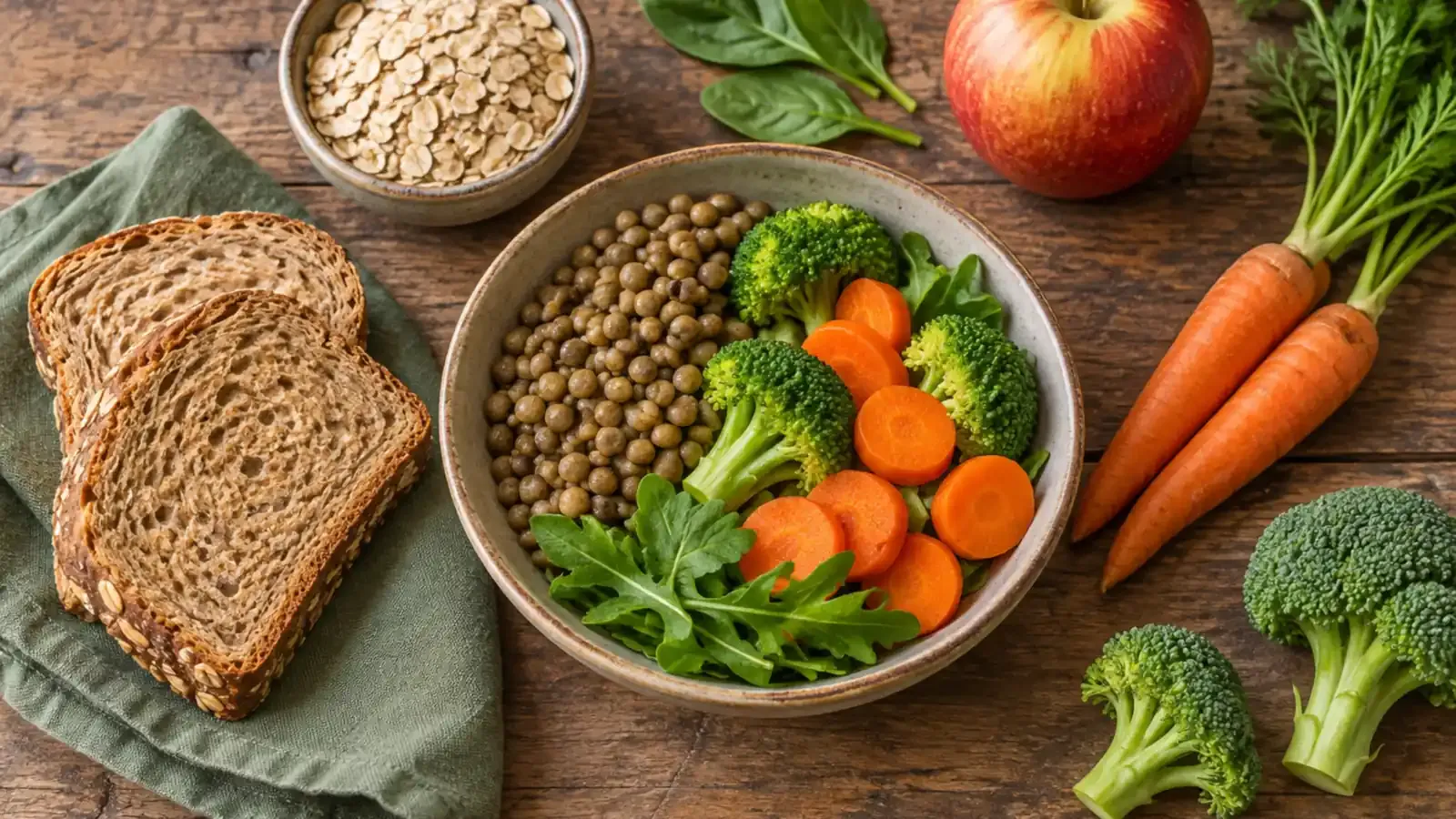
The German Nutrition Society (Deutsche Gesellschaft für Ernährung, DGE) recommends a varied mixed diet with plenty of vegetables, fruit, whole-grain products and legumes, and little sugar, few saturated fatty acids and moderate amounts of salt. Red and processed meat should appear on your plate only in small amounts. Alcohol consumption also affects cancer risk; the recommendation is to drink as little alcohol as possible, or none at all.
What matters is an energy balance that stays slightly below your needs over the long term. Radical diets are rarely suitable for this. Often it already helps to replace sweet drinks with water or unsweetened tea, or to choose snacks more deliberately.
Physical activity: how much is useful?
The World Health Organization (WHO) recommends that adults get at least 150 to 300 minutes of moderate aerobic activity per week, supplemented by strength training on at least two days. Brisk walking already counts. Regular activity affects your metabolism and helps reduce belly fat.
Everyday movement counts too: taking the stairs instead of the lift, short walks after meals, or a workplace where you get up from time to time can make a difference.
Practical tips for everyday life
- Measure calmly: Do not weigh or measure yourself every day. Once a week or every two weeks, at the same time of day, is enough.
- Take small steps: A goal such as “walk briskly for 20 minutes a day” is easier to keep up than a big plan.
- Plan vegetables in advance: A plate of vegetables or salad at the start of a meal helps you take in more fibre.
- Sleep more: Lack of sleep can affect appetite and metabolism. For adults, the aim is usually seven to nine hours.
- Take stress seriously: Long-term stress can change eating habits. Breaks, time outdoors or relaxation exercises can help.
- Quit smoking: Smoking significantly increases cancer risk and is an important step regardless of your weight.
- Attend screenings: Statutory early detection examinations, such as bowel cancer screening or skin cancer screening, should not depend on your waist circumference. They apply to all eligible age groups.
When should I seek medical advice?
If your waist circumference falls into the increased range, or you notice unintentional weight loss, persistent digestive problems, bleeding without a clear cause or new lumps, please speak to your family doctor promptly. There you can also discuss your screening options and clarify which steps suit you. A waist measurement alone is no reason for alarm, but it is a good occasion for a conversation.
Sources for this article: German Nutrition Society (DGE), World Health Organization (WHO) and the German Cancer Research Center (Deutsches Krebsforschungszentrum).
Overall, if you keep an eye on your waist circumference and improve your nutrition, physical activity and sleep over the long term, you are doing a great deal for your health, regardless of how the research develops in detail.
“
Key takeaways
- Belly fat, meaning the fat around the internal organs, is linked in large observational studies to a higher risk of several cancers, independent of body weight alone.
- Waist circumference is easy to measure yourself with a tape measure placed just above the hip bone; guideline values from medical societies help you interpret the result.
- The link is mainly based on observational evidence. Whether reducing waist circumference directly lowers cancer risk has not been fully clarified in all cases.
- Losing weight through more physical activity, a balanced diet and enough sleep can reduce waist circumference and improve other health factors at the same time.
- If your measurements are concerning or you have symptoms, talk to your family doctor, who can also advise you on early detection programmes.
Frequently asked questions
Is a large waist circumference automatically dangerous?
No. A larger waist circumference is one risk factor among several, but not a diagnosis. What matters is the overall picture of diet, physical activity, sleep, smoking and your other health values. If you are unsure, a conversation with your family doctor can help.
Can I lose fat from my belly specifically?
No, you cannot reduce fat in one specific place. Abdominal exercises strengthen the stomach muscles but do not specifically reduce belly fat. A combination of a balanced diet and regular activity affects the whole body, including the fat in the abdominal cavity.
How often should I measure my waist circumference?
About once a week or every two weeks is enough, always at the same time of day and with the same tape measure. Daily fluctuations are normal and caused by food, fluids or digestion. What matters is the trend over weeks and months.
Does the increased cancer risk only affect people with overweight?
Not only. People of normal weight can also have a lot of belly fat, and waist circumference captures this better than the BMI alone. Research examines the link differently for each type of cancer, which is why blanket statements should be avoided.