Does this sound familiar? You have lunch, and an hour later your stomach is already growling. Or you reach for cookies in the afternoon even though you are not really hungry. Hunger and fullness are not simply a matter of willpower. Your body signals how much it needs, and what you eat plays a big role in those signals.
Why does a bowl of lentil soup keep you going much longer than a bagel with jam, even when both have a similar number of calories? The answer mostly comes down to three qualities: the protein content, the fiber content, and the volume of the meal. Together, they help your stomach feel full for longer and influence the hormones that regulate appetite.
This guide walks you through which foods are especially filling, why that is, and where the research is still inconclusive. At the end, you will find practical tips you can use in everyday life.
How does fullness actually work?
Fullness is the feeling that you have eaten enough, and it lingers for a while after a meal. Two phases are usually distinguished. Early satiation is what brings a meal to an end. Lasting satiety determines how long it takes before you feel hungry again.
Several systems are involved. Stretch receptors in your stomach and intestines signal how full they are. Hormones such as ghrelin, which stimulates appetite, and gut signals such as GLP-1 or CCK also play a part. Your brain adds its own assessment based on taste, smell and past experience. This is why the same number of calories can feel very different depending on the food.
Which qualities make a food filling?
Protein
In studies, protein is considered the nutrient with the strongest filling effect per calorie. It is digested more slowly than carbohydrates, and protein-rich meals often lead to a longer feeling of fullness. Good sources include legumes, eggs, dairy such as low-fat Greek yogurt or cottage cheese, fish, lean meat and tofu.
Fiber
Fiber is the indigestible part of plant foods. It absorbs water, swells in your stomach and slows digestion. This is especially true of soluble fiber, found in oatmeal, beans, lentils and apples. Adults in the United States are advised to aim for about 25 to 38 grams of fiber per day, depending on age and sex, yet most people fall short.
Volume and energy density
Energy density describes how many calories are packed into each gram of food. Water-rich foods such as vegetables, fruit and broth-based soups take up a lot of space on your plate for relatively few calories. Your stomach gets filled without a large calorie load. Fat, at about nine calories per gram, has the highest energy density and tends to be less filling for the calories it provides.
Which foods keep you full the longest?
The list below summarizes the food groups that current research most often associates with fullness. Keep in mind that the effect depends on the whole meal, not just one ingredient.
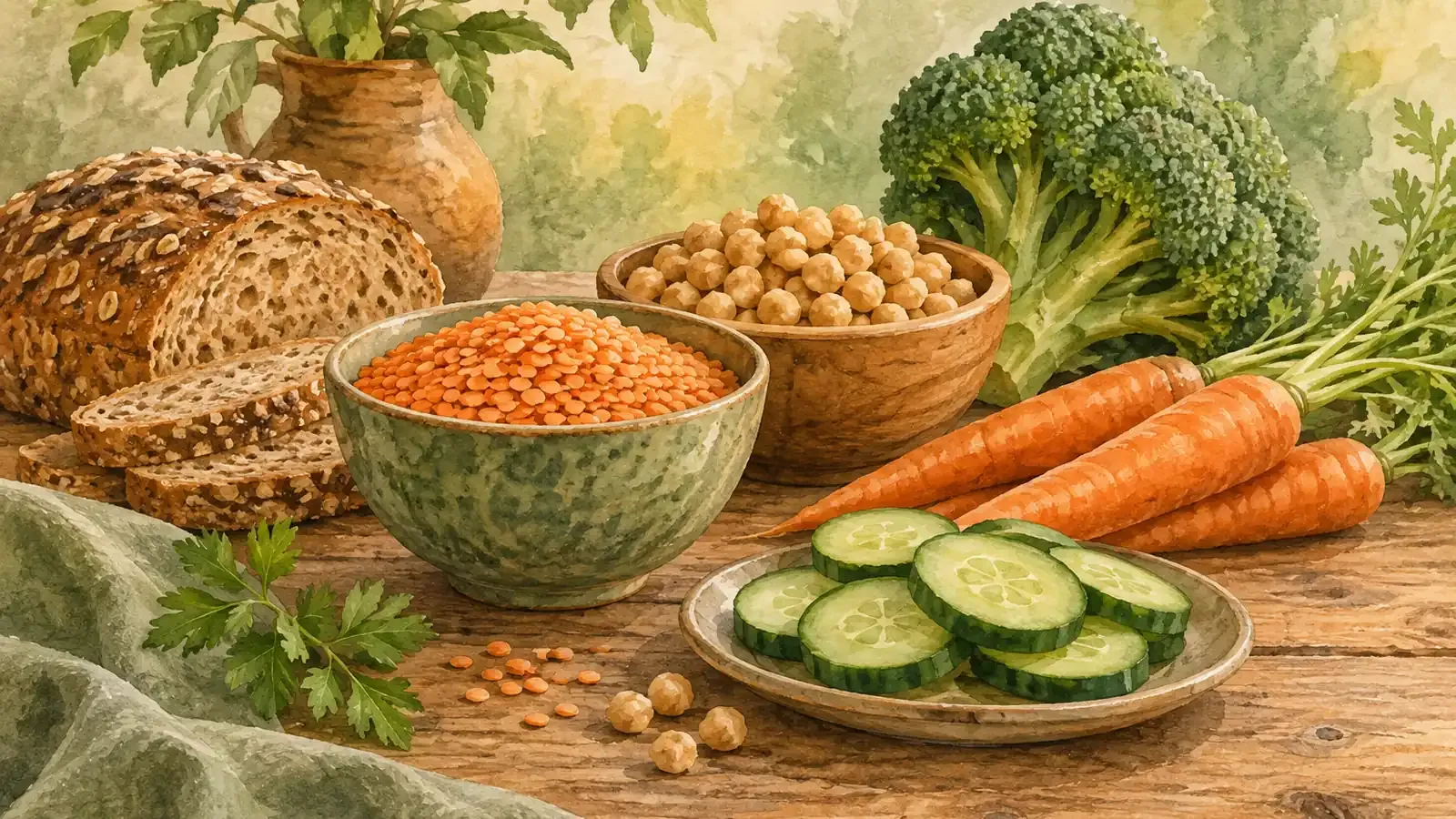
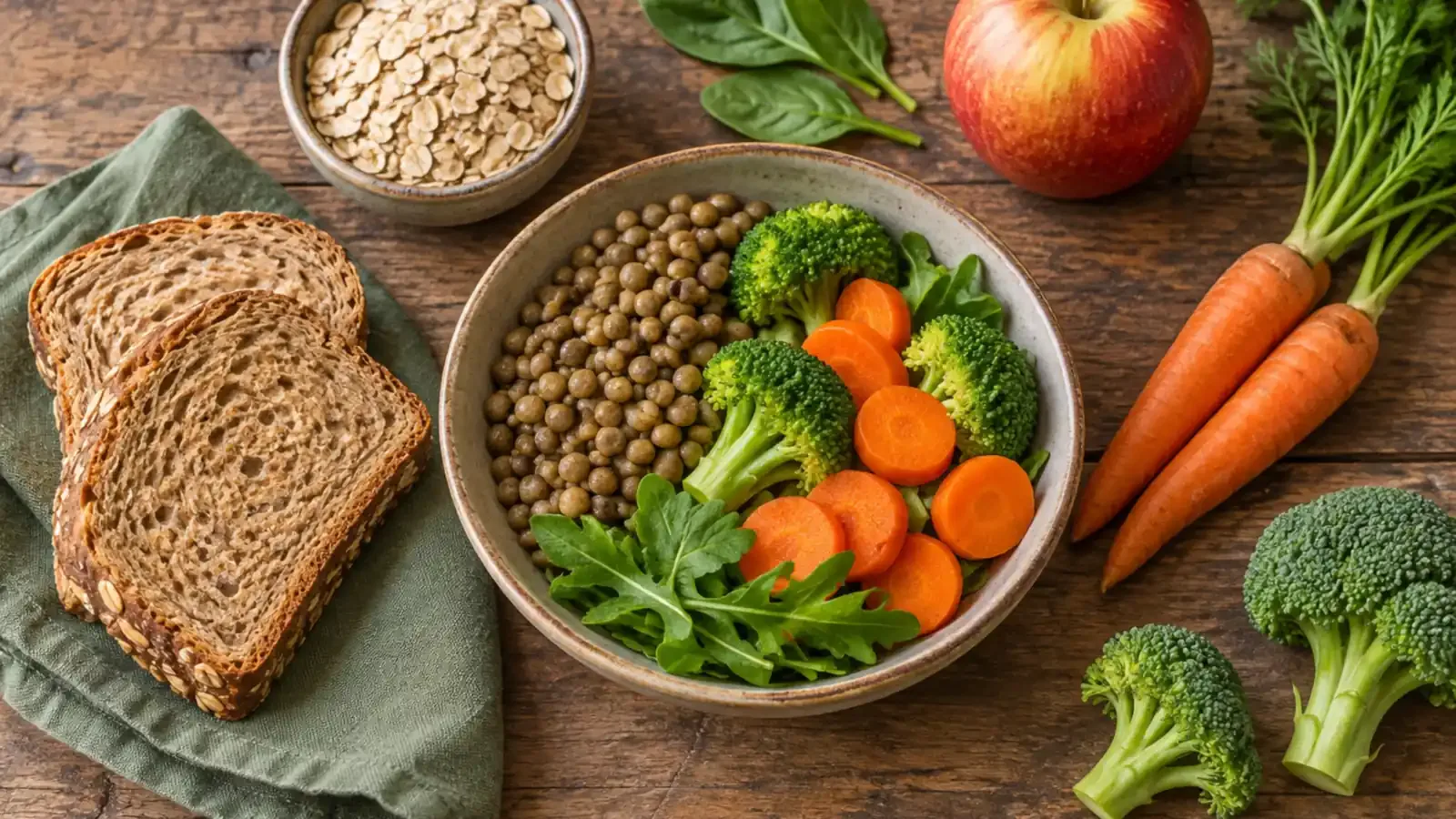
- Legumes, such as lentils, chickpeas and white beans, combine protein and fiber. They are a classic filling food.
- Whole grains, such as rolled oats, whole-wheat bread and brown rice, contain more fiber than their refined counterparts.
- Vegetables add volume and fiber with very little energy density, for example broccoli, carrots or leafy greens.
- Fruit, especially whole fruit with its skin or edible seeds such as apples and berries, provides water and fiber. Juice, by contrast, is hardly filling because the fiber is largely removed.
- Eggs are rich in protein and very versatile.
- Low-fat Greek yogurt and cottage cheese offer protein and work well as snacks.
- Fish and lean meat provide high-quality protein. Fattier cuts also satisfy hunger but contain more calories per serving.
- Nuts and seeds contain protein, fiber and healthy fats. Their energy density is high, so stick to small portions.
- Potatoes are often more filling than white bread or pastries, especially boiled and with the skin on. Fried versions lose this advantage because of the added fat.
What about foods that do little for fullness?
Sugary drinks and candy, refined flour products and heavily processed snacks often pack many calories into a small volume while offering little protein or fiber. Many people eat them and still feel hungry soon after. That does not mean you have to cut them out completely. It simply explains why they rarely feel like a satisfying meal.
Are there myths about filling foods?
A common myth is that you only need to eat the right “superfood” and hunger will disappear. The research does not support this. No single food works like an on-off switch. What matters is the combination of the meal, the portion size and your everyday habits.
Another myth is that fat is especially filling. Fat does slow stomach emptying, but it also brings a lot of calories. A meal with some fat can keep you full, but it can become calorie-dense very quickly.
Finally, the evidence for many individual foods is mixed. Different study designs, participant groups and measurement methods make clear-cut conclusions difficult. The general pattern, however, that protein-rich, fiber-rich and high-volume meals tend to keep people full longer, is comparatively well supported.
How can you put filling meals into practice?
You do not need to overhaul your entire diet. Small changes often make a noticeable difference:
- Start with vegetables or a broth-based soup. A small portion before the main course can make it easier to control how much you eat.
- Build each main meal around three components: a protein source, a fiber-rich side and vegetables.
- Choose whole grains where they fit. Oatmeal at breakfast or whole-wheat pasta at lunch increases your fiber intake.
- Eat fruit whole. An apple with its skin is usually more filling than a glass of juice.
- Add protein to snacks. Low-fat Greek yogurt with berries or a hard-boiled egg are easy options.
- Eat slowly and mindfully. Chewing thoroughly and pausing between bites gives your body time to send fullness signals.
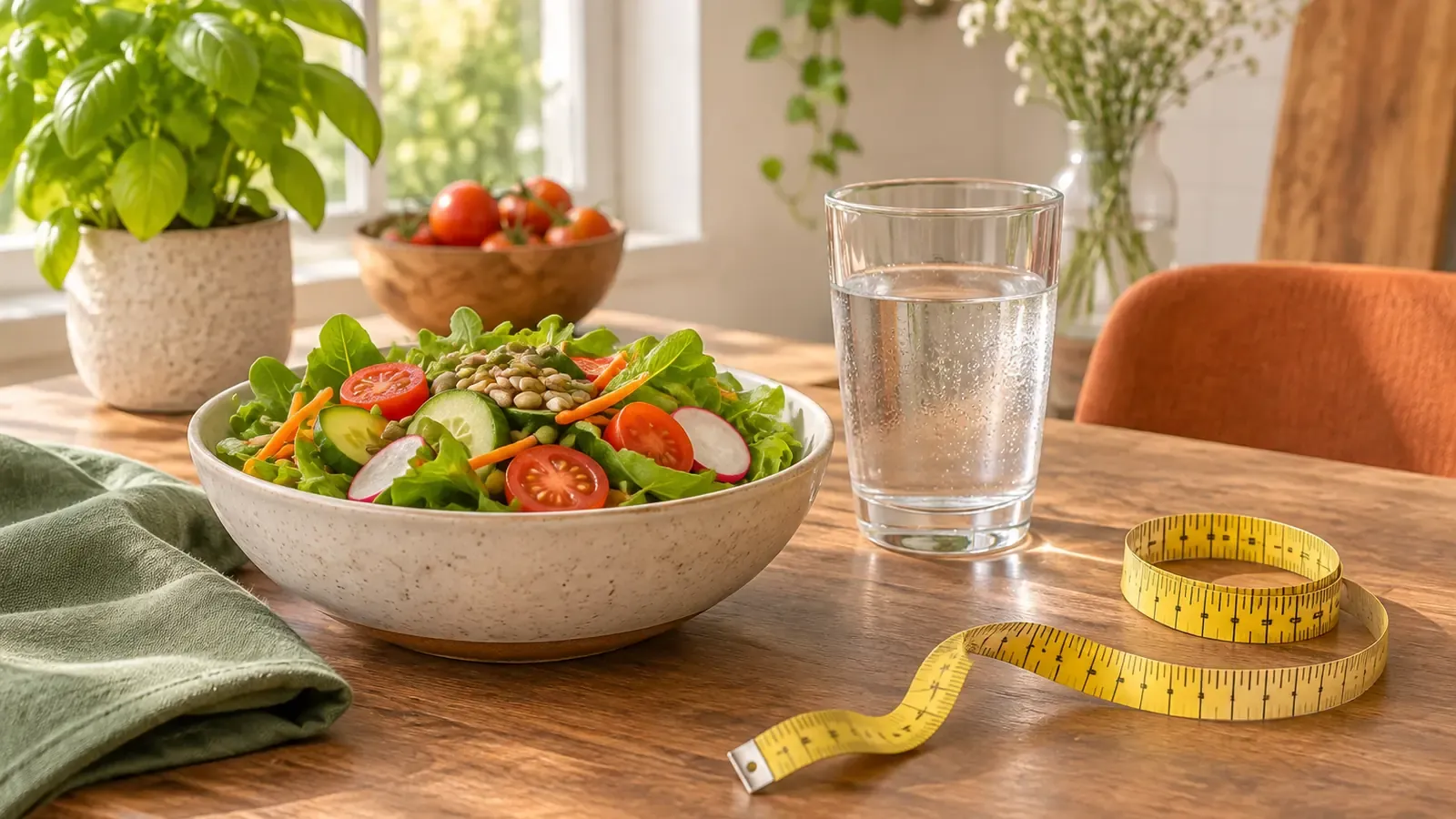
- Drink enough water. Water is not filling in the strict sense, but a glass before a meal can help you tell thirst from hunger.
- Plan your meals regularly. If you arrive at a meal extremely hungry, you are more likely to eat quickly and eat more.
When should you talk to a doctor?
If you feel unusually hungry despite eating regularly, lose or gain weight without trying, or notice a clear change in your appetite, it is worth talking with your primary care provider. Medical or nutrition support is also helpful if you have an eating disorder, diabetes or another condition that affects your appetite.
The information in this article is not a substitute for individual medical advice.
Key takeaways
- Protein, fiber and volume are the three qualities that make foods especially filling.
- Legumes, whole grains, vegetables, fruit, dairy, eggs, and lean meat or fish are among the foods that many people find keep them full for hours.
- Foods rich in water and fiber tend to have a low energy density: you get a lot of volume for relatively few calories.
- How full you feel also depends on chewing, eating pace, habits and emotions, not only on what is on your plate.
- Research on individual foods is often mixed, so a balanced eating pattern is the most reliable approach.
Frequently asked questions
Do eggs really keep you full longer than a bagel?
Protein-rich foods like eggs are often linked in studies to a longer feeling of fullness than carbohydrate-heavy, low-fiber meals with a similar number of calories. The effect depends a lot on the whole meal and on your personal habits.
Does drinking water help with hunger?
A glass of water before a meal can help you tell thirst from hunger, and in some studies drinking water before eating has been linked to eating a bit less. Water does not replace a meal, though, and the research on this is not consistent.
Are nuts a good choice if I want to feel full?
Nuts contain protein, fiber and fat, so they can be satisfying. They are also high in calories per gram. A small handful as a addition to a meal or snack is a good choice, since larger amounts add up quickly.
Do I have to avoid carbohydrates to stay full longer?
No. Carbohydrates from whole grains, legumes and vegetables are among the most filling foods. The main concern is heavily processed, low-fiber products such as white pastries or sugary drinks.