Many people notice it first in the mirror or because their trousers suddenly feel tighter: body weight is shifting towards the midsection. A little fat around the belly is normal and serves several functions. Still, more and more readers wonder whether belly size says more than the number on the scale, and whether something can be done about it.
The good news first: belly fat is not an unchangeable fate. For many years research has shown that exercise and a suitable diet can noticeably change how fat is distributed in the body, often before body weight changes much. What matters is understanding the connections and then staying with it.
This guide explains why belly fat matters for health, how you can assess it easily, and which measures are best supported by the research. The focus is on realistic everyday steps, not quick miracles.
Why is belly fat relevant to health?
Not all body fat is the same. Broadly speaking, a distinction is made between subcutaneous fat, which lies directly under the skin, and so-called visceral fat. “Visceral” refers to the internal organs: this is the fat that accumulates between the organs in the abdominal cavity.
Visceral fat is metabolically active. It releases messenger substances that can influence fat metabolism and insulin action. Large systematic reviews and recommendations from professional societies therefore describe a link between a lot of belly fat and a higher risk of type 2 diabetes, high blood pressure, disorders of fat metabolism and cardiovascular disease. Important to note: these are risk associations observed in large population groups. Whether and how strongly they apply to an individual depends on many other factors, such as genetics, physical activity and smoking.
People with a normal body weight can also carry a lot of belly fat. This is sometimes described as “normal-weight abdominal obesity”. That is why looking at the BMI alone is not always enough.
How can I tell whether I have too much belly fat?
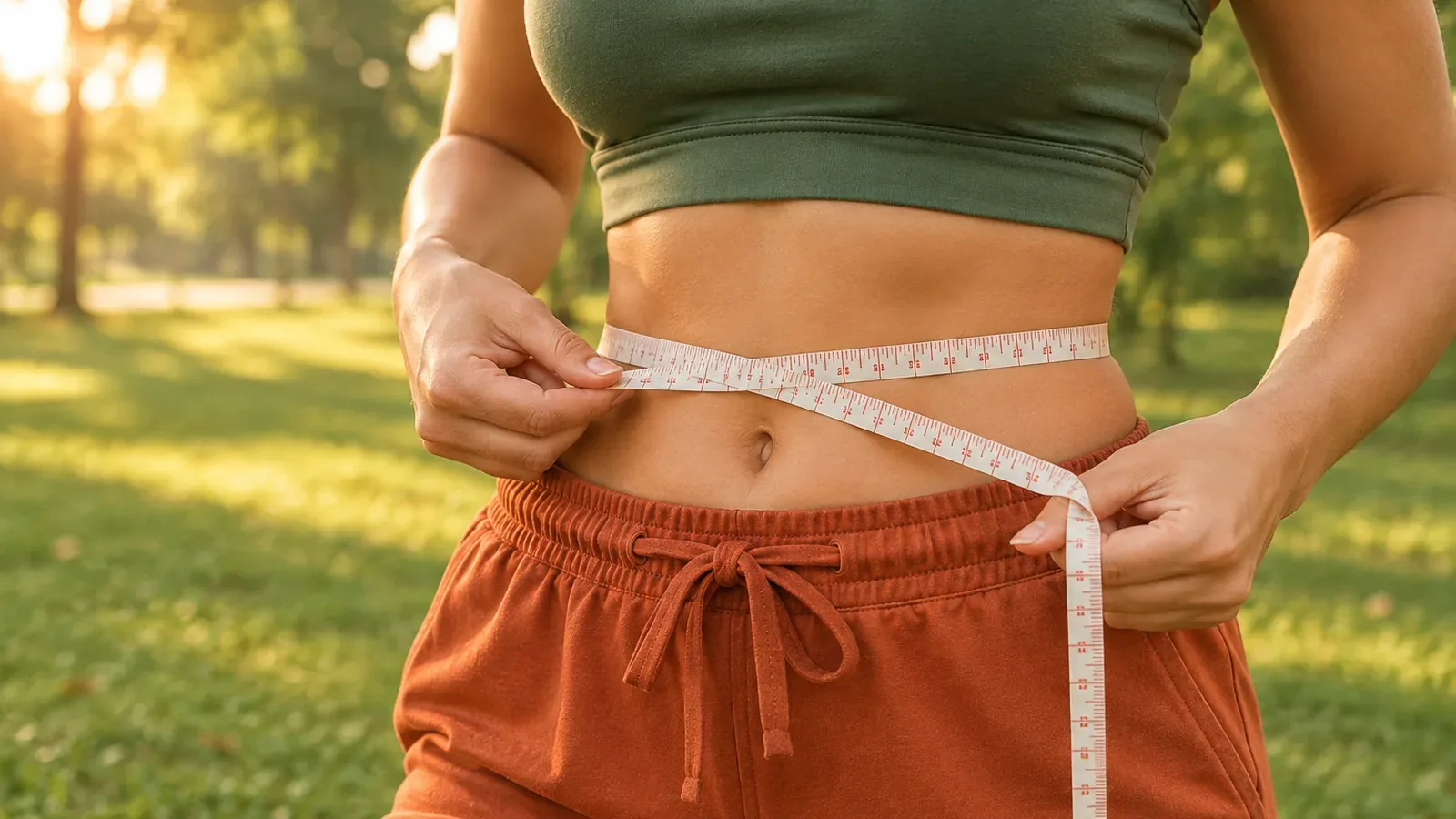
The simplest indicator is waist circumference. You measure it halfway between the lowest rib and the top of the hip bone, while breathing out calmly, with a tape measure held horizontally around your body. Professional societies publish reference values above which health risk increases, and these differ slightly depending on the country and organisation. As a rough guide in Germany: a waist circumference from about 94 cm in men and about 80 cm in women is considered increased, and values well above these are considered significantly elevated.
The waist-to-hip ratio is another option, but for most people waist circumference alone is sufficient. It is important to repeat the measurement regularly and always under the same conditions, for example in the morning after using the toilet. The result is a hint, not a diagnosis. To assess your blood values and cardiovascular risk, a medical check-up is the right route.
Does exercise really help against belly fat?
Yes, physical activity is among the best-supported measures. However, it is less about special exercises for the stomach muscles. Sit-ups do not specifically reduce the fat on your belly; the body does not burn fat reserves where you train. What works is the overall amount of activity across the week.
The recommendations of the World Health Organization (WHO) and German professional societies for adults are about 150 to 300 minutes of moderate endurance activity per week, supplemented by strength training on at least two days. Studies show that regular activity in particular can reduce visceral fat, even when body weight hardly drops at first.
Which types of activity are suitable?
- Brisk walking: Even a fast walk during which you can still talk but not sing counts as moderate endurance activity.
- Cycling or swimming: Gentle on the joints and easy to adjust in intensity.
- Strength training: Squats, lunges, wall push-ups or bodyweight training strengthen muscles that support your basal metabolism.
- Everyday movement: Taking the stairs, gardening, or walking or cycling to work add up.
If you have been inactive for a long time, start slowly and increase duration step by step. A combination of endurance and strength usually works better than either one alone.
Which diet helps reduce belly fat?
When it comes to nutrition, there is no single miracle ingredient and no food that specifically shrinks the belly. What matters is a long-term negative energy balance, meaning you take in slightly less energy than you use, along with a diet that keeps you full and supports your health. The German Nutrition Society (Deutsche Gesellschaft für Ernährung, DGE) recommends a wholesome, mostly plant-based diet with plenty of vegetables, fruit, wholegrain products and legumes.
Several reviews show that dietary changes combined with exercise reduce belly fat more than either diet or exercise alone. Whether one particular diet is superior to another is not clearly established. Many approaches lead to similar results when they are followed consistently.
Practical building blocks for your diet
- Cut back on sugary drinks: Soft drinks, fruit juices and energy drinks provide a lot of energy without making you feel full. Water, sparkling water or unsweetened tea are better companions.
- Increase fibre: Vegetables, legumes, wholegrains and fruit keep you full longer and support digestion.
- Limit alcohol: Alcohol provides many calories and is frequently associated with fat accumulation around the belly. Drinking less is a sensible step.
- Keep an eye on portions: A smaller plate, eating slowly and regular meals help you avoid overeating.
- Choose processed foods less often: Ready meals, snacks and sweet baked goods often contain a lot of sugar, fat and salt but little fibre.
What about crash diets and miracle products?
Extreme diets that skip meals or completely ban entire food groups are poorly suited to lasting belly fat reduction. Often what is lost first is mainly water, and after the diet ends the weight frequently returns. Products promising a flat stomach generally do not live up to this claim. For dietary supplements, there is no proven effect on targeted belly fat loss.
Realistic results come from small changes you can maintain over the long term. Even a moderate weight loss can favourably change fat distribution, and physical activity works even without large weight losses.
What role do sleep and stress play?
If you regularly sleep too little or live under chronic stress, you often have stronger cravings, move less and reach for energy-dense snacks more often. Studies suggest that lack of sleep may be associated with less favourable fat distribution. The connections are complex, however, and the research is not yet conclusive. In any case, a good, regular sleep routine and ways to manage stress, such as walks, relaxation exercises or fixed recovery times, support your overall well-being and make it easier to follow other measures.
Practical tips for everyday life
- Measure your waist once a week: Write the value down so you can track progress, even when the scale stays the same.
- Set an activity goal: For example, brisk walking for 30 minutes three times a week and two short sessions of strength exercises.
- Change one thing per day: For example, replace a soft drink with water or your evening snack with fruit.
- Fill your plate: Half with vegetables, a quarter with wholegrains or potatoes, and a quarter with a protein source such as legumes, fish, egg or dairy.
- Plan for setbacks: A weak day is not a failure. What matters is getting back on track the next day.
- Set a regular bedtime: Consistent sleep times make everyday life easier and help limit cravings.
When should I seek medical advice?
If your waist measurement is above the reference values, your weight changes without an obvious reason, or you notice symptoms such as shortness of breath during exertion, chest pain or breathlessness, please speak with your family doctor. Blood pressure, blood sugar and blood fats can be checked there, and a personal plan can be worked out. Medical consultation is also advisable before a major change to your diet or training if you have existing health conditions.
Note: The DGE (German Nutrition Society) is the German expert body for nutrition; the WHO (World Health Organization) publishes the global physical activity guidelines.
Key takeaways
- Belly fat is more than a layer of padding: above all visceral fat, which surrounds the internal organs, is linked to a higher risk of cardiovascular disease and type 2 diabetes.
- Waist circumference is a simple indicator of belly fat; professional societies publish reference values above which the risk rises.
- Regular physical activity, especially a combination of endurance and strength training, is among the best-supported ways to reduce belly fat.
- A balanced diet rich in vegetables and fibre, with few sugary drinks and a moderate energy balance, supports fat loss; crash diets and miracle products bring little lasting benefit.
- Sufficient sleep and managing chronic stress can also influence your waistline; if you are unsure or have symptoms, seek medical advice.
Frequently asked questions
Is belly fat more dangerous than fat on the hips and thighs?
Visceral fat in the abdominal cavity is more closely linked to metabolic diseases than subcutaneous fat on the hips and thighs. This does not mean that every bit of fat around the belly is automatically a problem. Waist circumference gives a good, simple indication.
Can you target belly fat with exercises?
No, the body does not burn fat reserves specifically where you train. Abdominal exercises strengthen the muscles but do not specifically reduce the fat on top of them. What works is the overall load from regular endurance and strength training combined with a suitable diet.
Can you lose belly fat without losing weight?
Yes, this is possible: regular physical activity can reduce visceral fat even when body weight hardly changes. Many people nevertheless see the greatest effect when exercise and a diet with a slight energy deficit come together.
How quickly does waist circumference change?
This varies greatly from person to person and depends on your starting point, activity and diet. Changes usually become visible over weeks to months. Measuring once a week helps you track progress realistically.