Want to eat healthier but not sure where to start? Between low-carb trends, superfoods and the endless debate over whether bread is good or bad, it is easy to lose track. The good news is that a balanced diet doesn’t require complicated rules. The U.S. Dietary Guidelines for Americans and the USDA’s MyPlate summarize well-researched recommendations in a few clear principles that are easy to follow.
This article explains what healthy eating is really about, which food groups should appear on your plate and how often, and how to make it work in daily life without weighing every bite. It focuses on the basics, not on diets or miracle foods.
First, the reassuring part: a single meal will not make or break your health. What matters is the overall pattern you build over weeks and months. That is exactly what the dietary guidelines are designed to help you achieve.
What does a balanced diet actually mean?
A balanced diet gives your body all the nutrients it needs, in the right proportions. That includes macronutrients such as carbohydrates, protein and fats, which your body needs in larger amounts, as well as micronutrients like vitamins and minerals, which it needs in smaller amounts. Fiber, the indigestible plant material that supports digestion and helps you feel full, is part of the picture too.
Variety is the key. No single food contains everything you need. If you eat a range of vegetables, whole grains and fruits across the week, you get a much broader spectrum of nutrients than someone who eats the same “healthy” foods every day.
Which foods should make up most of your plate?
The USDA’s MyPlate divides your plate into sections for fruits, vegetables, grains and protein, with a glass of dairy or a dairy alternative on the side. Plant foods take up the largest share. The core principles can be summed up like this:
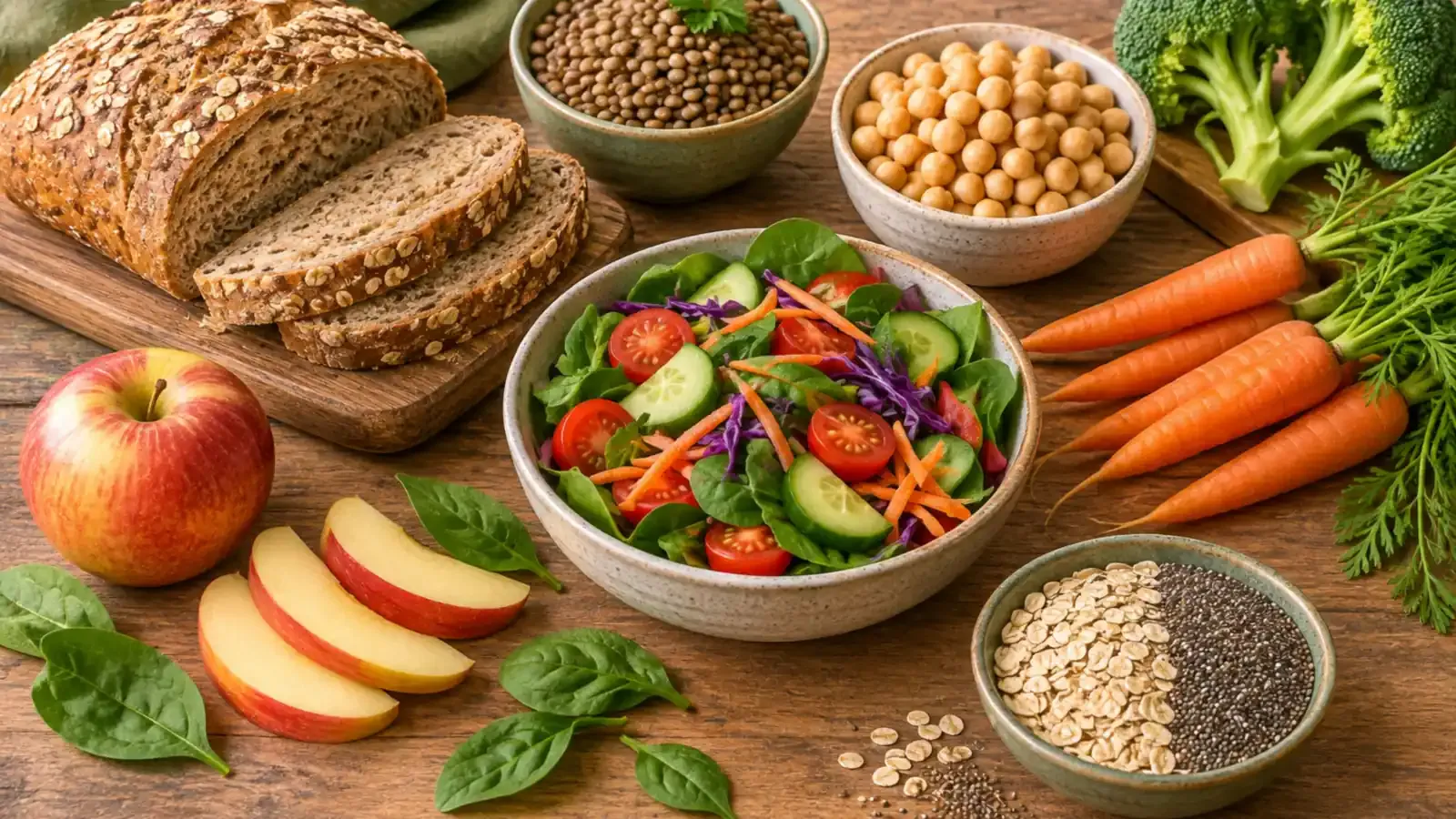
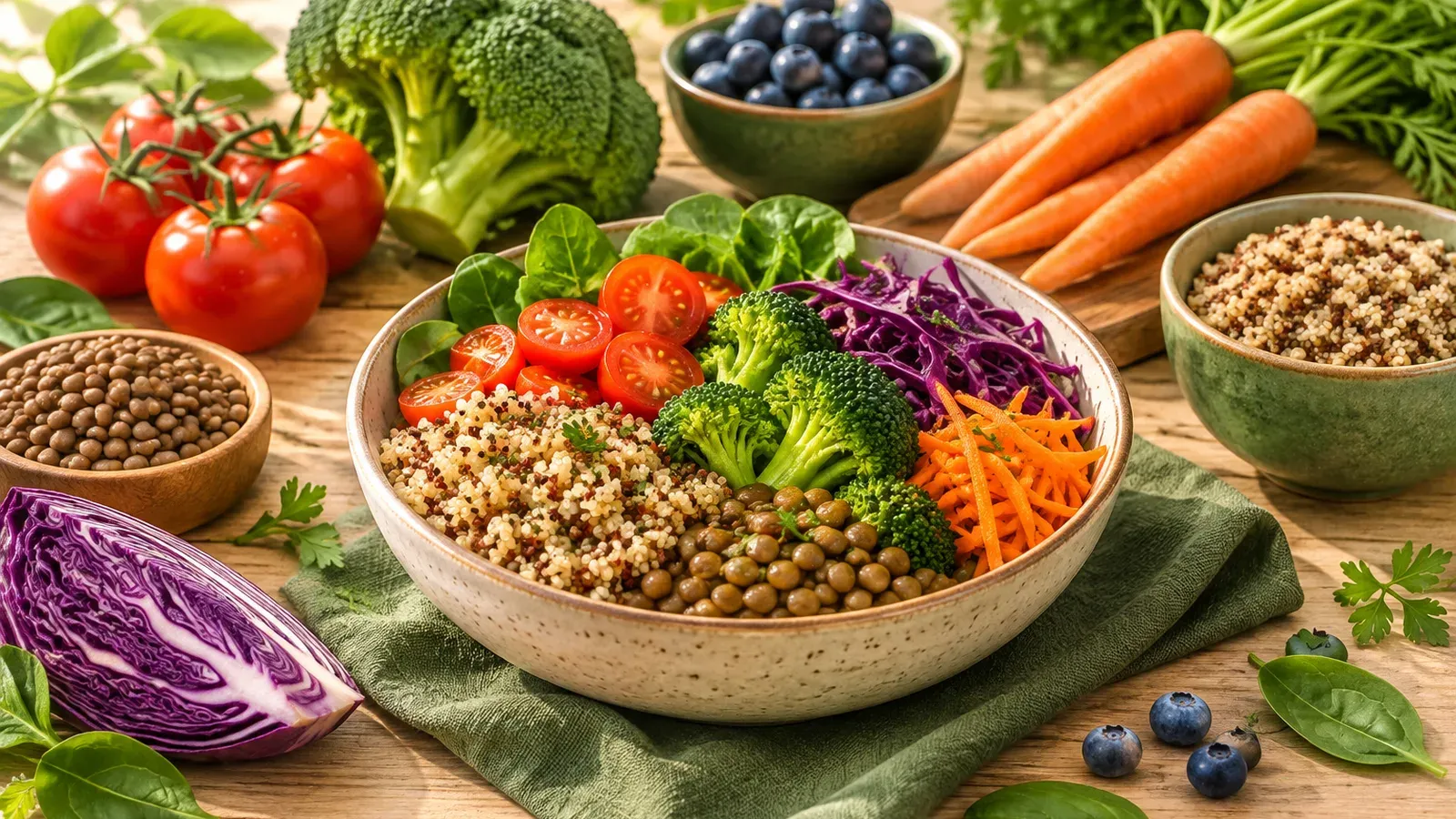
- Vegetables and fruit: eat plenty, aiming for several servings a day. Fresh, frozen or canned without added sugar or salt all count.
- Whole grains and potatoes: choose whole-grain versions where you can, such as whole-wheat bread, oatmeal, whole-wheat pasta or brown rice.
- Beans, lentils, nuts and seeds: black beans, lentils, chickpeas and nuts provide plant protein, fiber and minerals.
- Milk and dairy: in moderate amounts, such as yogurt or cottage cheese. Lower-fat options are a good choice for many people.
- Meat, poultry, fish and eggs: keep portions moderate. Limit processed meats like bacon, sausage and deli meats, and include fish, such as salmon or sardines, at least twice a week.
- Vegetable oils and spreads: canola, olive or walnut oil are good fat sources. Use butter and stick margarine sparingly.
How much sugar, fat and salt is okay?
Myths about these nutrients are everywhere. Fat is not automatically unhealthy, and carbohydrates don’t inherently make you gain weight. What counts is the type and the amount. The dietary guidelines recommend keeping foods high in added sugar, saturated fat and sodium as occasional treats and cooking more of your own meals so you can control what goes in.
For salt, the Dietary Guidelines recommend no more than 2,300 milligrams of sodium a day, about one teaspoon of table salt. Most of it doesn’t come from the salt shaker but from bread, deli meats, cheese, packaged foods and snacks. If you cook more often and season with herbs, spices or a squeeze of lemon, you will naturally use less.
An everyday example
A bowl of oatmeal topped with yogurt, nuts and fresh fruit is a good mix of whole grains, protein, healthy fats and vitamins. A sugary pastry made with refined flour and frosting, on the other hand, mostly delivers quick energy and a lot of sugar. Both can have a place at the table. The oatmeal should be the foundation, and the pastry the occasional exception.
How much should you drink?
Fluids are an underrated part of nutrition. The National Academies suggest roughly 15.5 cups (about 3.7 liters) of total water a day for men and 11.5 cups (about 2.7 liters) for women, and much of that comes from food as well as drinks. Water is the best choice for most people. Unsweetened tea, coffee and sparkling water count too. Your needs go up in hot weather, during exercise or when you have a fever. Sugary drinks like soda, sweet tea or fruit drinks add many calories without making you feel full, so save them for occasional treats.
How do you put healthy eating into practice?
Good intentions often fall apart in everyday life. These small steps can help without turning your routine upside down:
- Add vegetables to every main meal: a handful of tomatoes on your sandwich, bell peppers in a pasta salad or carrots in a soup is a good start.
- Switch to whole grains gradually: in the first few weeks, mix white and whole-wheat bread. The change is easier that way.
- Plan for beans and lentils: one bean chili or chickpea salad a week is enough to begin with.
- Keep healthy options visible: put fruit, nuts and fresh vegetables where you can see them, and keep sweets and chips out of sight.
- Cook extra: make a bigger batch at dinner and you’ll have ready-made lunch for the next day.
- Keep water within reach: a bottle on your desk is a simple reminder to drink.
Myths you can safely let go
“No carbs after 6 p.m.” and “fruit makes you fat” are common misconceptions. For weight and health, what matters is your overall energy balance and the pattern of your diet, not the time of day or a single food. Fruit does contain natural sugar, but it also provides vitamins and fiber, and it belongs on your plate every day.
Is the research always clear?
Many nutrition questions can’t be answered with certainty, because observational studies show associations but cannot prove cause and effect. The core principles, however, are well supported: plenty of plant foods, little ultra-processed food and moderate amounts of animal foods. If you stick to these basics, you don’t need to chase every new study.
When should you talk to a healthcare provider?
If you lose weight without trying, feel tired all the time, have trouble with eating or digestion, or suspect a condition such as diabetes, high blood pressure or a food intolerance, talk with your doctor or a registered dietitian. Personalized advice is also important during pregnancy, breastfeeding, childhood, or in older age.
Key takeaways
- Healthy eating is built on variety: when you regularly eat plenty of vegetables, fruit, whole grains and legumes, you cover most of your needs for nutrients and fiber.
- The USDA’s MyPlate and the Dietary Guidelines for Americans summarize the key principles in a simple picture: half your plate should be fruits and vegetables, and the rest should be protein and whole grains.
- Fat, sugar and salt are not strictly off-limits, but they are best used sparingly; unsaturated oils and nuts are better fat sources than many solid animal fats.
- Drinking enough matters: water or unsweetened beverages are the best everyday choice.
- Eating well works best with small, repeatable habits rather than strict rules.
Frequently asked questions
Do I have to avoid carbohydrates to eat healthy?
No. Dietary guidelines recommend getting carbohydrates mainly from whole grains, potatoes, beans, lentils and vegetables. The products that are less helpful are those high in added sugar and refined flour, which provide little fiber.
How many fruits and vegetables should I eat each day?
The USDA suggests about 2 to 2.5 cups of vegetables and 1.5 to 2 cups of fruit a day for most adults, depending on age, sex and activity level. A practical rule is to fill about half your plate with fruits and vegetables at each meal.
Do I need supplements if I eat a balanced diet?
If your diet is varied, you usually don’t need supplements. Whether you have a specific need, for example during certain life stages, is best checked with your doctor or a registered dietitian.
Is meat generally unhealthy?
Not in itself, but guidelines advise keeping portions of meat moderate and limiting processed meats such as bacon, sausage and deli meats. Fish, beans, lentils and eggs are good alternatives or additions to your plate.