Many people pay more attention to their diet than they used to, and soon come across the topic of protein. Protein is often presented in advertising, on packaging and on social media as a kind of cure-all. At the same time, many readers ask a very practical question: am I actually eating enough of it, and how would I even know?
The good news first: a balanced diet covers the protein needs of most healthy adults without much effort. Problems rarely arise from a fundamental shortage, but rather from misunderstandings that lead to one-sided habits. Some people eat too little protein, others far too much, and still others rely on products that they do not need at all.
This guide shows you how to meet your protein needs in everyday life and which common mistakes you can avoid. The information is based on the recommendations of the Deutsche Gesellschaft für Ernährung (DGE, the German Nutrition Society) and on generally accepted knowledge.
How much protein does the body actually need?
Protein, also called Eiweiß in German, is made up of amino acids. Your body needs them, among other things, to build and maintain muscles, skin, hair and immune cells, as well as for many enzymes and messenger substances. Unlike fat or carbohydrates, the body cannot store protein in large amounts, which is why a regular intake makes sense.
For healthy adults, the DGE gives a guideline value of about 0.8 grams of protein per kilogram of body weight per day. For a person weighing 70 kilograms, this would be around 56 grams. This is an estimate for the majority of people, not an exact target for every individual. Your actual need depends on factors such as age, body build, physical activity and health.
The situation is somewhat different for older people. With age, the body’s ability to maintain muscle mass decreases. Professional societies therefore often recommend a somewhat higher intake for people from about 65 years onward, ideally spread across the day. People who do a lot of sport or want to build muscle may also have a higher need. How high exactly it should be, however, is not always clearly established.
Which typical mistakes do many people make with their protein intake?
In everyday life, similar patterns appear again and again. It is worth knowing these common misconceptions.
Mistake 1: More is automatically better
Many people reach for very large amounts of protein, for example through shakes or protein bars, in the belief that this additionally supports muscles or health. This is not supported by evidence. If you already eat a normal and varied diet, you usually get enough protein. A permanently very high intake places an unnecessary strain on the body, and it also costs extra money. For healthy people with healthy kidneys, there is no evidence that moderately increased amounts cause harm, but the benefit beyond the actual need is small.
Mistake 2: Relying mainly on the evening meal
A common pattern: hardly any protein at breakfast, little at lunch, and then a large portion of meat or fish in the evening. However, the body cannot use a large amount at once as efficiently as it can use smaller amounts. Research suggests that an even distribution across several meals is more favourable, especially for preserving muscle in old age. The exact ideal distribution, however, has not yet been fully settled.
Mistake 3: Underestimating plant-based protein
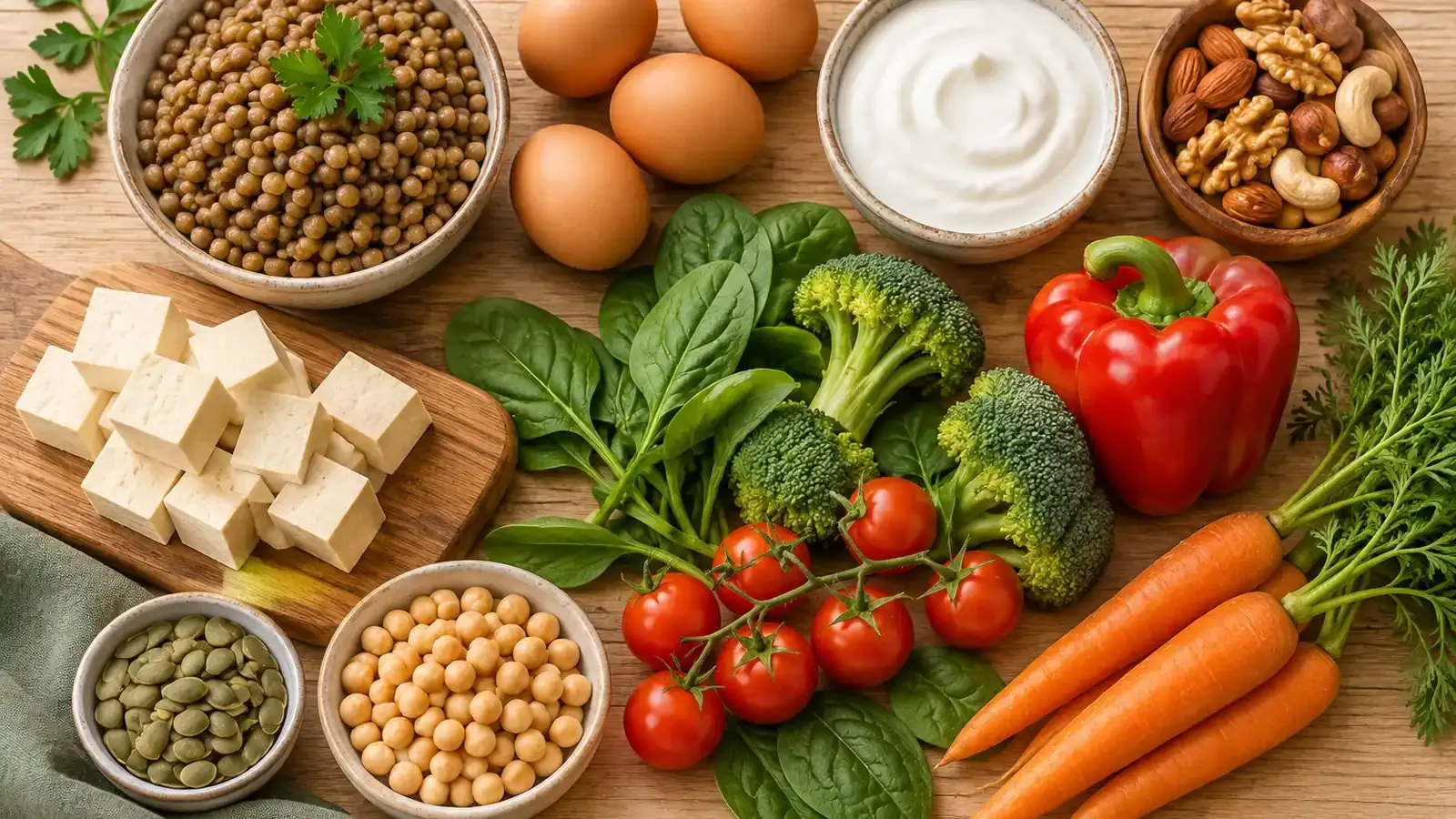
If you eat a plant-based diet or reduce your meat consumption, you may wonder whether the amount is sufficient. Legumes, whole-grain products, nuts, seeds and soy products do provide valuable protein. However, plant proteins sometimes contain fewer of certain amino acids in the proportion the body needs. By combining different sources over the course of the day, for example lentils with whole-grain rice or oat flakes with nuts, this pattern is usually well balanced out.
Mistake 4: Thinking of protein only as meat
Dairy products, eggs and fish are also excellent sources of protein. If you only think of meat, you often overlook how easily protein can also come from quark, yoghurt or eggs.
Mistake 5: Planning without looking at the overall diet
Protein-rich foods often also bring fat, salt or a lot of sugar, for example processed sausage or convenience products with added protein. It is worth keeping the overall quality of your diet in view, rather than optimising just one nutrient.
How can you easily meet your protein needs in everyday life?
Most people do not need a calculator, but a simple orientation. These rules of thumb help in daily life:
- Plan one protein source at each main meal, such as legumes, fish, egg, quark, tofu or lean meat.
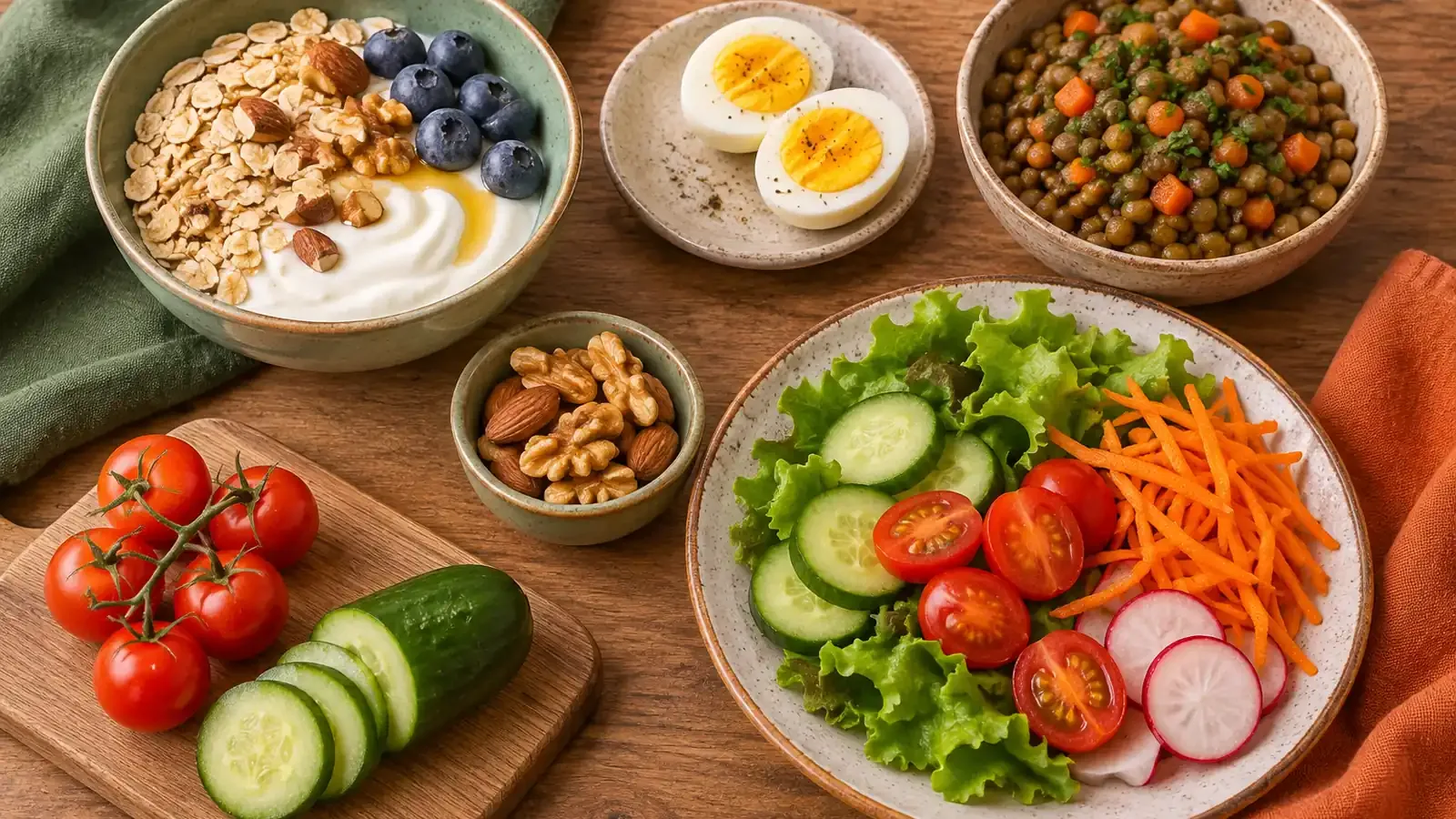
- Upgrade breakfast: oat flakes with yoghurt and nuts, wholegrain bread with egg or cottage cheese.
- Choose snacks consciously: plain yoghurt, a piece of cheese, a handful of nuts or vegetables with hummus.
- Include legumes regularly, for example lentils in a stew, chickpeas in a salad or white beans with vegetables.
- Keep variety, so that different protein sources come together over the week.
A rough guide helps: one portion of quark, a glass of milk or yoghurt, two eggs or a portion of legumes each provide a noticeable share of the daily requirement. If you eat these foods regularly, you are usually on a good track.
Why are dietary supplements not necessary?
Protein powders and other products are often presented as indispensable. For most people with a normal diet, this is not the case. Besides protein, foods also provide vitamins, minerals and fibre, which powders lack. If you are interested in such products, ask yourself whether your diet is really lacking, and discuss this with a professional if needed.
Are there groups with special requirements?
Different considerations apply in some life situations. Older people, people recovering from illness or surgery, and people who want to build or maintain muscle mass often have a higher need. In kidney disease, on the other hand, a too high protein intake can be unfavourable, and the amount should then be set by a doctor. Pregnancy and breastfeeding also have their own recommendations, which should be discussed with specialists.
Practical tips for everyday life
- Do a quick calculation once: Multiply your body weight by 0.8 to get an orientation.
- Observe for one week: Roughly note what you eat. This quickly shows you where protein is lacking.
- Plan your pantry: Shelf-stable legumes from a jar or can, eggs and plain yoghurt are simple basic foods.
- Spread rather than collect: Try to include something protein-rich at every meal.
- Add movement: Strength training, for example with your own body weight, supports muscle maintenance alongside your diet.
- Listen to your body: If you feel full, energetic and healthy, you are usually already meeting your needs.
When should you seek medical advice?
If you lose weight unintentionally, feel persistently weak, notice muscle loss or have a kidney disease, it is worth talking to your doctor. There, it can be clarified whether and which protein intake is suitable for you. This guide cannot replace a diagnosis or an individual dosage recommendation.
Note: This article does not replace individual medical advice.
Overall, a varied diet that is rich in plant foods and protein, including dairy products, eggs, fish, legumes and whole grains, covers the needs of most people well. If you know the typical misconceptions, you neither need to overdo it nor worry unnecessarily.
Key takeaways
- The German Nutrition Society (DGE) recommends about 0.8 grams of protein per kilogram of body weight per day as a guideline for adults; for older people and in certain situations, the requirement may be higher.
- More protein does not automatically mean better health: if you already eat enough, you usually gain little from additional protein products.
- Spreading protein-rich foods across several meals makes it easy to meet your needs without dietary supplements.
- Plant-based protein sources such as legumes, whole grains, nuts and soy can fit well into a balanced diet when combined in a varied way.
- If you have kidney disease, are pregnant or have other health questions, your protein intake should be discussed with your doctor.
Frequently asked questions
How much protein should I eat per day?
The DGE gives about 0.8 grams of protein per kilogram of body weight per day as a guideline for healthy adults. For a person weighing 70 kilograms, this is around 56 grams. Older people or physically active people may have a higher need.
Is plant-based protein enough for a sufficient supply?
Yes, if you combine different plant sources such as legumes, whole grains, nuts and soy over the course of the day. This way the amino acids complement each other well. A varied selection is more important than any single source.
Do I need protein powder to meet my needs?
For most people with a balanced diet, protein powder is not necessary. Foods provide not only protein but also other important nutrients. If you are unsure, a conversation with your doctor or a nutrition professional can help.
Does a lot of protein harm the kidneys?
With healthy kidneys, there is currently no clear evidence that a usual, fairly high protein intake causes damage. In existing kidney disease, however, the amount can be unfavourable and should be set by a doctor.