You may have noticed it: your pants fit differently, the stairs feel steeper than they used to, and getting up from a chair takes a little extra push. Many people chalk this up to getting older without realizing that a slow loss of muscle mass is often behind it. This is where protein plays an important role.
How much protein you need is not a simple question, because it depends on your age, body weight, activity level, and overall health. The good news is that recommendations have shifted in recent years, and for older adults many experts now suggest more protein than they once did. This article explains what those numbers mean, how to put them into practice day to day, and where the limits of current knowledge lie.
How much protein do adults need?
In the United States, the Recommended Dietary Allowance (RDA) for healthy adults is 0.8 grams of protein per kilogram of body weight per day. For a person weighing 154 pounds (70 kilograms), that works out to about 56 grams a day. This amount covers the needs of most healthy adults who are not specifically trying to build muscle.
It helps to understand that the RDA is a minimum target that meets the needs of most healthy people. It is not an upper limit, and it is not necessarily the best amount for everyone. Whether you can do well with less or benefit from more depends on your goals and your body.
Why do protein needs rise with age?
Starting around age 30, many people gradually lose muscle mass unless they do something to counter it. This process is called sarcopenia. It often becomes more noticeable after age 60. Part of the cause is less physical activity, and part is hormonal and metabolic change.
Interestingly, muscle tends to respond less strongly to protein as we age than it does in younger adults. Researchers describe this as “anabolic resistance,” meaning the muscle’s response to protein is weaker. As a result, an amount that is plenty for a 30-year-old may not be enough later in life to slow muscle loss.
For healthy older adults, experts commonly suggest roughly 1.0 to 1.2 grams of protein per kilogram of body weight per day. For people with acute illness or significant muscle loss, even higher amounts are sometimes discussed. The exact optimal amount is not fully settled, however, and studies on the topic are sometimes inconsistent.
Does it matter how you spread protein across the day?
Yes, the total amount matters, but so does the timing. Muscle appears to respond to protein at each meal, and it seems to respond best when a single portion contains a meaningful amount. Many experts consider about 25 to 30 grams per meal a sensible range, especially for older adults. This figure comes from review articles and should be treated as a guide rather than a hard rule.
In everyday terms, a breakfast with very little protein (say, just a bagel with jam), a small lunch, and a large dinner built around a big steak spreads protein unevenly. A more even pattern across three or four meals is generally better.
Protein works best alongside movement
Perhaps the most important finding from the research is this: protein alone does not build muscle. The strongest signal for maintaining muscle is resistance training, meaning activity that challenges your muscles against some form of resistance, such as your own body weight, light dumbbells, or exercises like sit-to-stand squats from a chair. Protein supports that adaptation. If you eat plenty of protein but barely move, you will benefit much less. Major guidelines, including those from the U.S. Department of Health and Human Services and many professional societies, recommend muscle-strengthening activities at least two days per week.
Which protein sources are a good choice?
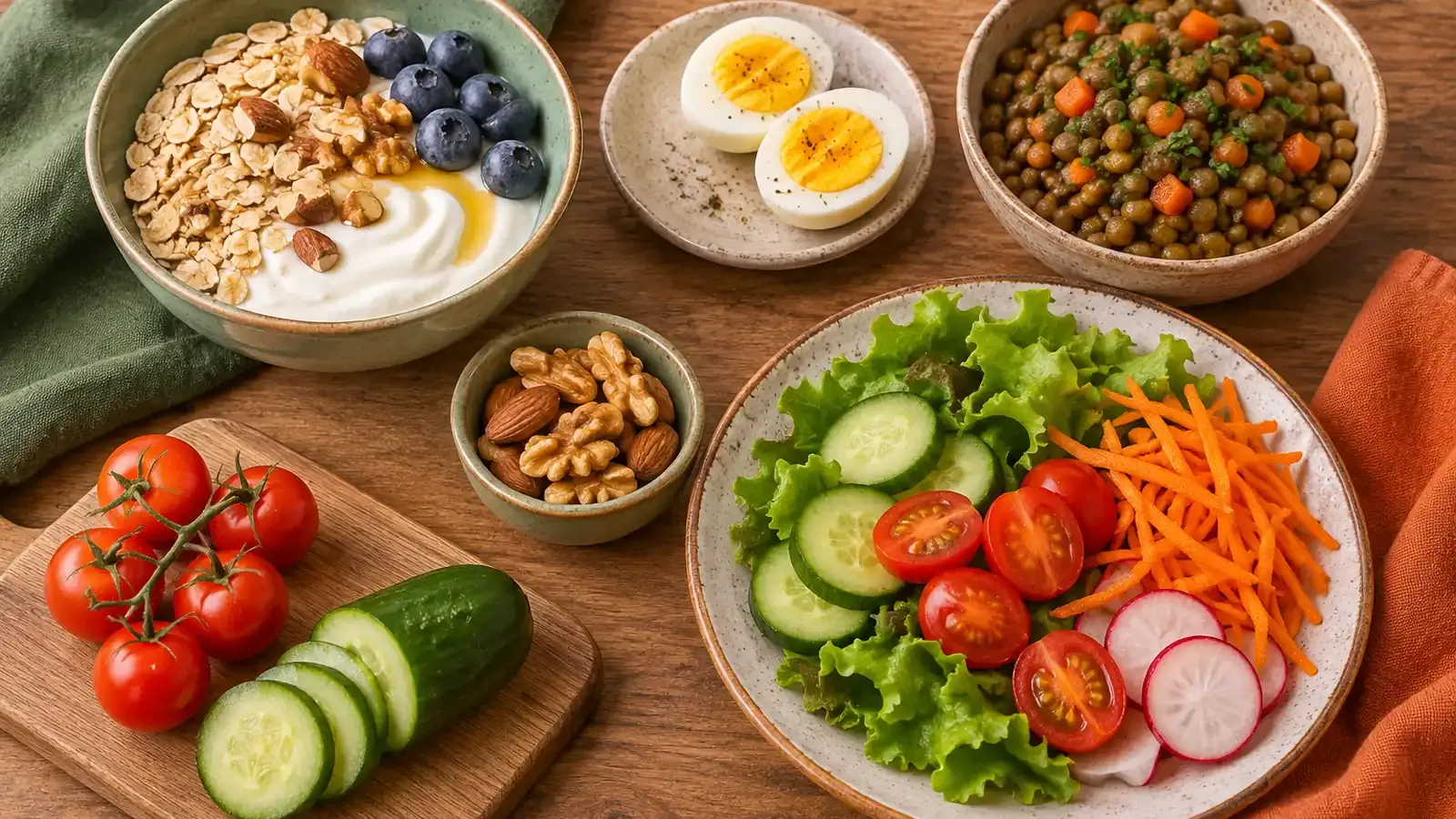
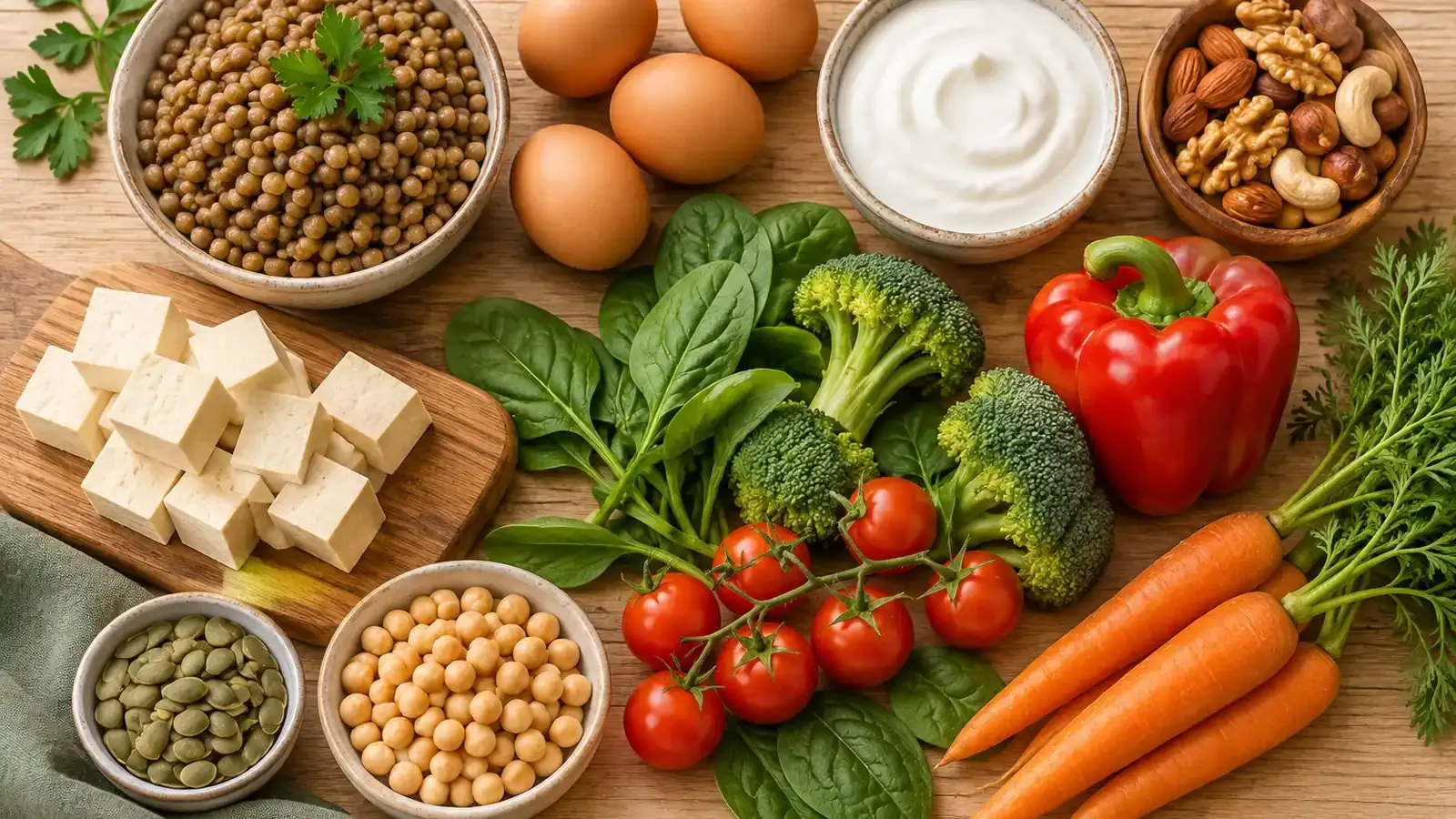
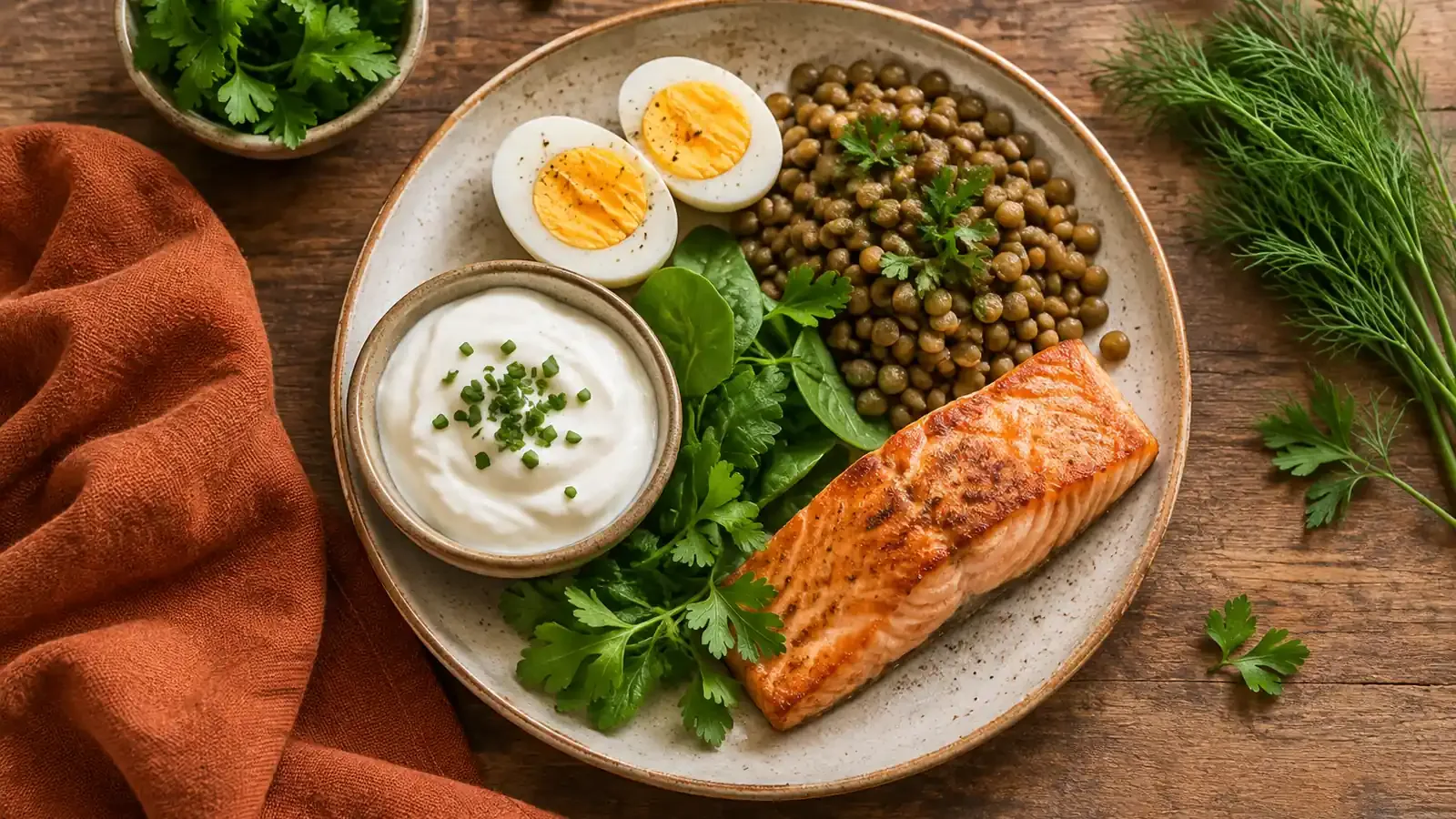
Protein comes from both animal and plant foods. Animal sources such as milk, Greek yogurt, cottage cheese, eggs, fish, and lean meat provide all the essential amino acids, the building blocks your body cannot make on its own. Plant sources such as beans, lentils, tofu, nuts, and whole grains are also valuable, but you often need a larger amount to get a similar effect, so it helps to combine them, for example lentils with whole-grain bread.
- Greek yogurt, cottage cheese, or skyr at breakfast
- Eggs, cottage cheese, or tofu as building blocks for dinner
- Fish once or twice a week
- Beans, lentils, or chickpeas as a side dish or main course
- Nuts and seeds as a supplement, not as your only source
What about kidney disease or other health conditions?
If your kidneys are healthy, a higher protein intake is generally well tolerated. The picture changes when kidney function is reduced. In that case, a high protein intake can affect the course of the disease, and lower amounts are often recommended. Other chronic conditions can also mean that the right amount differs from the general guidance for healthy adults. If you have a health condition or take medications that affect your metabolism, talk with your doctor or a registered dietitian about what makes sense for you.
Common myths about protein and aging
One common belief is that “a lot of protein always harms the kidneys.” For healthy people, there is no solid evidence for this. What is true is that existing kidney disease changes the situation, but that is a different scenario.
A second myth is that “as you get older, you simply need less food.” That is often true for total calories, but not for protein. If you eat less overall, it is especially important not to cut back on protein-rich foods. A third misconception is that protein powders or shakes are essential. For most people, protein needs can be met with ordinary foods.
Practical tips for everyday life
- Start with one protein source per meal: Greek yogurt, eggs, beans, or fish are often the easiest place to begin.
- Spread your portions out: Aim for a solid portion of protein at each of your three main meals.
- Move regularly: Sit-to-stand squats, climbing stairs, or light dumbbell training two days a week work best when combined with adequate protein.
- Combine plant proteins: Lentils with brown rice or hummus with whole-grain bread complement each other well.
- Watch your appetite and weight: Unintended weight loss or a drop in appetite is a reason to check in with your healthcare provider.
- Drink enough fluids: Many older adults feel thirsty less often. Water supports digestion and overall metabolism.
When should you talk to a doctor?
If you lose weight without meaning to, feel noticeably weaker, have falls, or live with a chronic condition, talk with your primary care doctor. They can help determine whether a particular protein target makes sense for you and, if needed, check your muscle strength and nutritional status.
If you have questions about eating well as you age, for example because of trouble swallowing or a poor appetite, a visit with a registered dietitian is a good next step.
Key takeaways
- The RDA for healthy adults is 0.8 g of protein per kg of body weight per day, which covers the needs of most healthy people who are not specifically building muscle.
- From about age 30, muscle mass tends to decline gradually unless you counteract it, a process called sarcopenia, and it often becomes more noticeable after 60.
- Older adults often respond less strongly to protein, so many experts suggest about 1.0 to 1.2 g per kg per day for healthy seniors, though the ideal amount is not fully settled.
- Protein works best together with strength training, and spreading protein across meals, with a solid portion at each one, is helpful.
- People with kidney disease or other chronic conditions should talk with their doctor before increasing protein intake on their own.
Frequently asked questions
How much protein do I need per day?
The RDA for healthy adults is 0.8 grams per kilogram of body weight per day. Many experts suggest about 1.0 to 1.2 grams per kilogram for healthy older adults. Your exact target depends on your health and activity level.
Is protein alone enough to keep muscle as I age?
No. Protein supports muscle maintenance, but it works best together with strength training. Simple exercises using your body weight, done about twice a week, can make a meaningful difference.
Does eating a lot of protein harm my kidneys?
There is no solid evidence that it does in people with healthy kidneys. If you have reduced kidney function, a high protein intake can be unsuitable, so talk with your doctor first.
Do I need protein powder or shakes?
For most people, protein needs can be met with everyday foods such as Greek yogurt, cottage cheese, eggs, fish, beans, and lentils. Powders are not necessary.