Protein is a building block for muscles, skin, hair, enzymes and many messenger substances. Few topics in nutrition are discussed as controversially: some recommend as much protein as possible, while others consider it unnecessary to pay attention to it at all. If you are wondering how much protein makes sense in everyday life, the sober answer depends on your age, body weight and activity level.
The good news first: for most people in Germany, getting enough protein is not a problem. If you eat regularly, you usually take in enough. Still, a closer look is worthwhile, because needs are not the same for everyone, and a consistently very high intake also raises questions.
Below, you will learn which reference values apply, how needs change at different life stages, and how to judge whether you are getting too much.
How much protein does a healthy adult need?
The German Nutrition Society (Deutsche Gesellschaft für Ernährung, DGE) gives a reference value of about 0.8 grams of protein per kilogram of body weight per day for healthy adults. This value is an intake that covers the needs of the vast majority of people. It is deliberately set on the lower side and describes the amount at which a deficiency is unlikely, not the optimal amount for each individual.
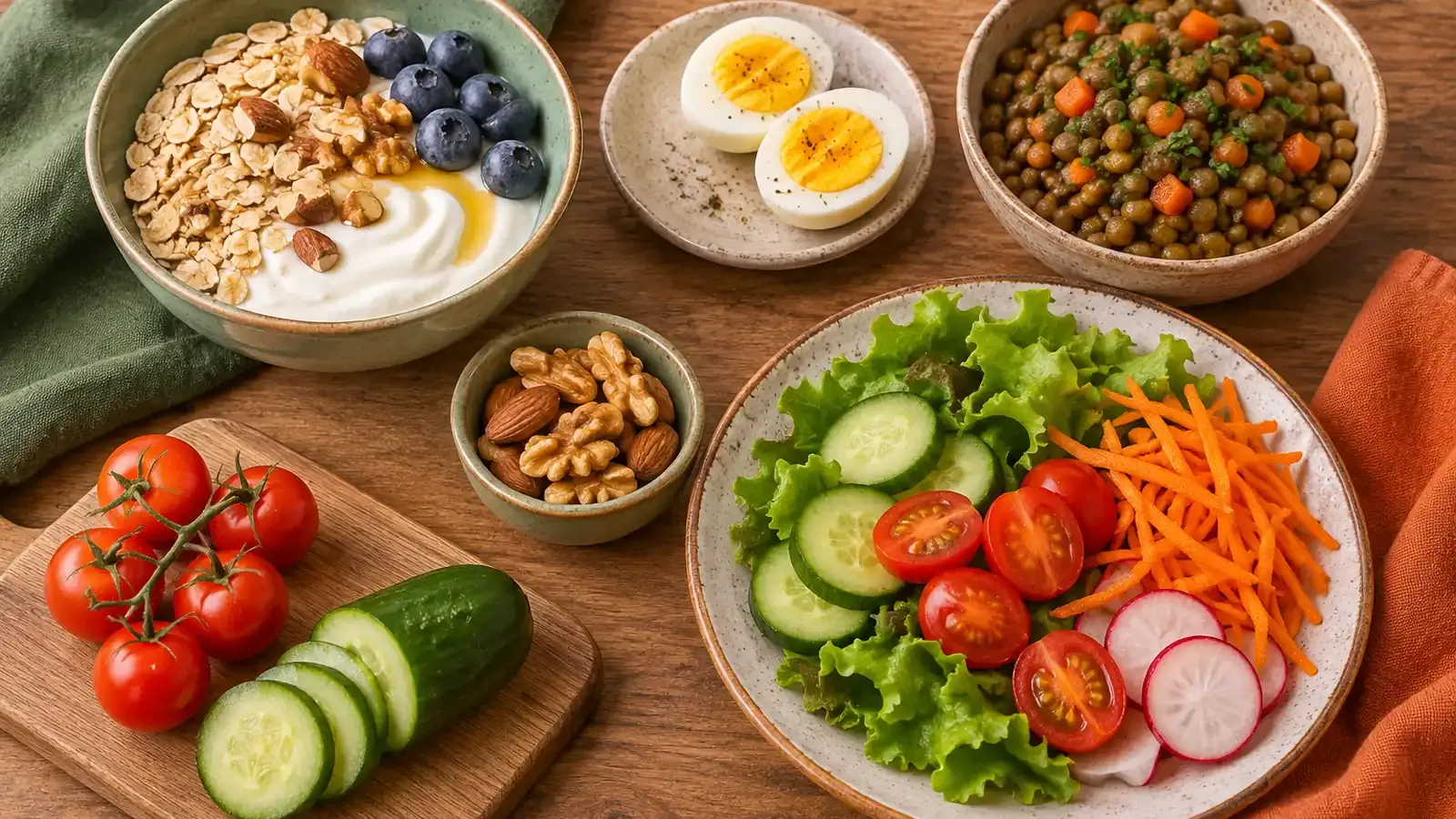
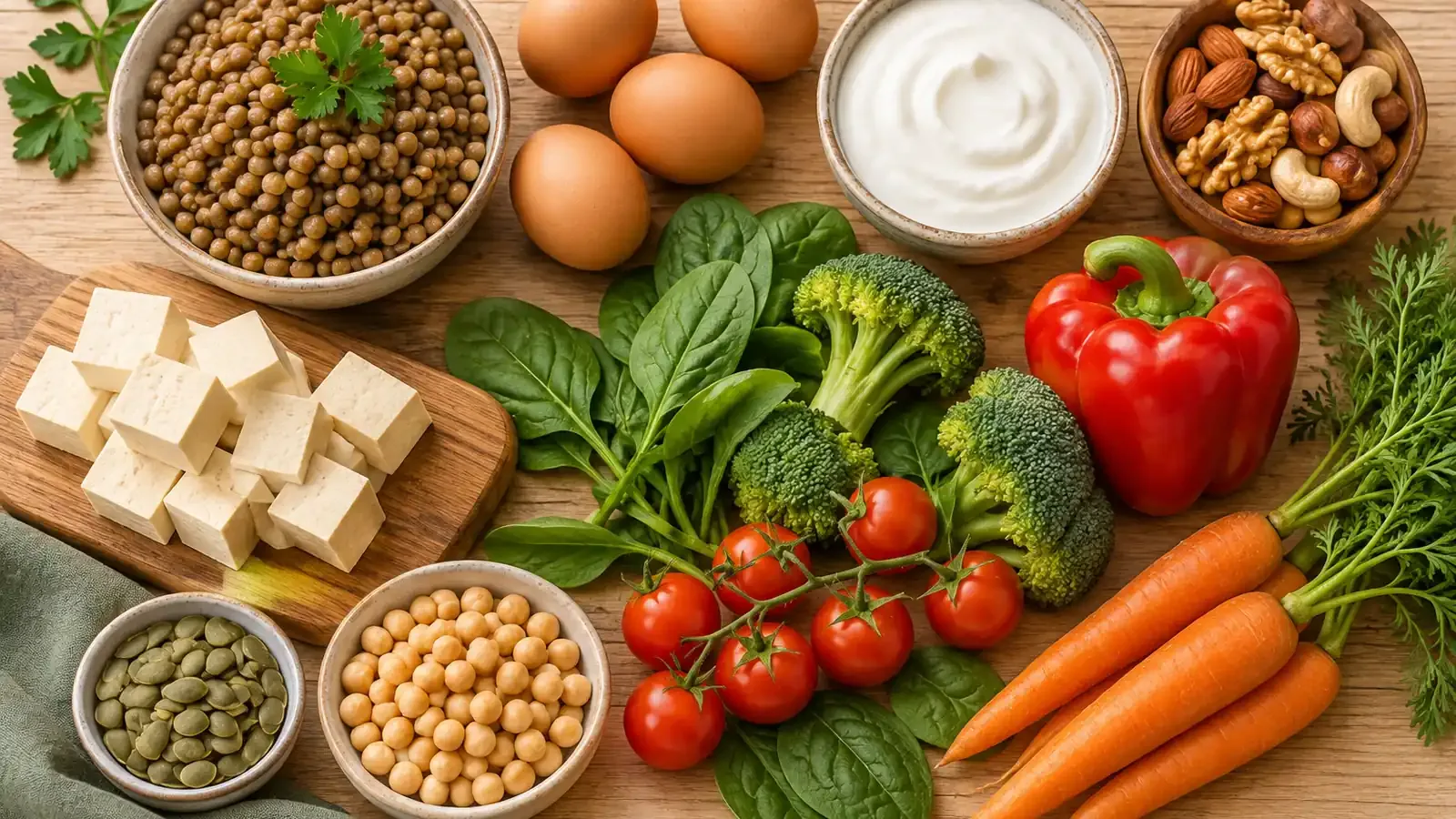
For a person weighing 70 kilograms, this works out to roughly 56 grams per day. For comparison, a 250-gram portion of quark, a slice of wholegrain bread with cheese and a glass of milk already provide a good part of that. For everyday orientation, it is usually enough to include a protein-rich food at each meal, such as legumes, fish, eggs, dairy products, tofu or lean meat.
What the reference value does not mean
A reference value is not a target you must hit exactly, and it is not an upper limit. If you eat somewhat more, that does not automatically cause a problem. Conversely, there is no need to count every gram every day, as long as your overall diet is varied.
How does protein need change with age?
With increasing age, muscle mass often declines, and the body responds less efficiently to protein. For this reason, several expert societies recommend a higher intake than the basic value for adults for older people, especially from about 65 years onwards. The recommendations vary by body and can be well above 0.8 grams per kilogram; the range is still under discussion among experts.
For you as a reader, this means: as you get older, think about a source of protein at every meal and make sure you eat sufficient amounts. Especially with a low appetite, after illness or if chewing is difficult, it makes sense to reach for protein-rich but easily tolerated foods such as yoghurt, eggs or gently cooked fish.
What role does exercise play in protein needs?
If you do regular strength training or endurance sport, you use more energy and put greater strain on your muscles. Your muscles then need protein to build and repair tissue. Many sports medicine societies give values for people who do intensive strength training that lie above the basic requirement, often in the range of about 1.2 to 2.0 grams per kilogram of body weight. There is no single, universally valid figure; age, training goals and total energy intake all play a role.
It is also important to spread protein intake across the day. Several protein-rich meals are usually more practical than one large portion in the evening. A balanced diet with enough carbohydrates and vegetables further supports recovery.
If you exercise, you do not need special products
For most recreational athletes, a normal diet with dairy products, legumes, eggs, fish or meat is sufficient. Expensive protein supplements are not necessary. Research shows that the body can utilise protein from food just as well.
When does too much protein become a problem?
Excess intake usually does not come from one extra portion of quark, but from a consistently very high intake, for example from numerous protein shakes, bars and powders on top of an already protein-rich diet. For healthy people, there is so far no clear evidence that a moderately increased intake is harmful. However, the research on the long-term effects of very high amounts is not fully clarified, and the data base is thin in many areas.
Pay attention to possible strain on your body if you:
- have kidney disease or suspect that a kidney is impaired,
- drink little but still consume large amounts of protein,
- use many supplement products at the same time and lose track of the total amount.
With protein, the basic principle is this: a diet made from normal foods is the safest route. Protein-rich products with many additives are not automatically healthier than quark, lentils or eggs.
Which protein sources make sense?
Protein occurs in both animal and plant foods. Animal sources such as milk, cheese, eggs, fish and meat contain all essential amino acids in a good ratio. Plant sources such as legumes, wholegrains, nuts, tofu and soy products complement each other well when combined, for example lentils with rice or oats with nuts.
People who eat vegetarian or vegan diets can usually cover their needs well, but should pay attention to variety and sufficient amounts. Foods that are low in fat and high in protein, such as low-fat quark or legumes, are also a good choice if you want to keep your heart and circulation in mind.
An example from everyday life
- Breakfast: Oats with yoghurt and nuts
- Lunch: Lentil soup with wholegrain bread
- Dinner: Baked fish with roasted vegetables and potatoes
- In between: An egg or a handful of seeds
Practical tips for everyday life
A few simple habits help you keep track of your protein needs without weighing every meal:
- Plan a protein-rich component for each main meal.
- Spread protein across the day instead of concentrating it in one meal.
- Include legumes such as lentils, chickpeas or beans once or twice a week.
- Choose yoghurt, quark, nuts or an egg as snacks instead of sweet pastries.
- Drink enough, especially if you eat a lot of protein.
- Do not rely on protein products as a replacement for a balanced diet.
- If you are losing weight, make sure your protein intake is maintained, as it helps protect muscle mass.
When should you seek medical advice?
If you have kidney disease or are unsure whether your kidneys can tolerate a higher protein intake, speak with your doctor before making any change. Medical clarification is also advisable in cases of unintended weight loss, persistent weakness, or if you are an older person who is barely eating anymore. A nutrition counselling session can help you realistically assess your personal amounts.
Key takeaways
- The German Nutrition Society (DGE) gives a reference value of about 0.8 grams of protein per kilogram of body weight per day for healthy adults; this is a minimum amount that covers the needs of most people, not an optimal target for everyone.
- Older adults, people recovering from illness and people who train intensively often have a higher need, which some expert societies set well above the basic value.
- For most healthy people in Germany, a varied diet covers protein needs without the need to count grams.
- A consistently very high protein intake is not automatically harmful for healthy people, but the long-term effects are not fully clarified; caution is advised with kidney disease.
- Plant and animal protein sources can complement each other; what matters most is the total amount and some variety across the day.
Frequently asked questions
How do I calculate my daily protein requirement?
As a guide for healthy adults, the DGE reference value is about 0.8 grams per kilogram of body weight. Multiply your weight in kilograms by 0.8 to get a reference figure. With exercise, at an older age or after illness, the sensible value may be higher.
Is too much protein harmful?
For healthy people, there is no clear evidence that a moderately increased intake is harmful. However, the research on the long-term effects of very high amounts is not fully clarified. If you have kidney disease, you should set your intake together with your doctor.
Do I need protein powder to build muscle?
Usually not. The body utilises protein from normal foods such as dairy products, eggs, legumes, meat or fish well. If you eat enough and varied, you can usually meet your needs without supplement products.
Is protein from plant sources enough?
Yes, with a varied diet, people eating plant-based can usually cover their needs well. Legumes, wholegrains, nuts and soy complement each other nicely. Pay attention to sufficient amounts and to combining different sources.